
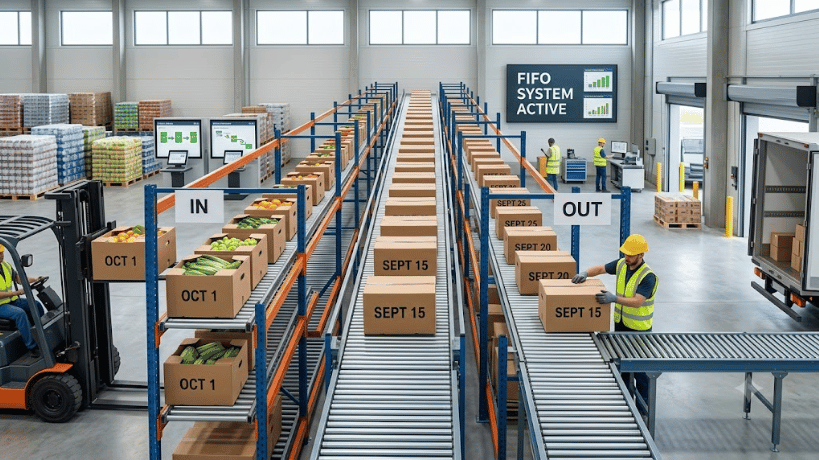
Whether you’re a business owner, accounting student, warehouse manager, investor, or simply curious about inventory management, understanding FIFO is essential. FIFO, which stands for First In, First Out, what does FIFO refer to? First-In, First-Out (FIFO) is one of the most widely used inventory valuation and stock management methods worldwide.
It is based on the simple principle that the oldest inventory purchased or produced should be sold or used before the newer inventory. This approach reflects the natural flow of goods in many industries and helps businesses maintain accurate financial records, reduce waste, improve inventory control, and enhance operational efficiency.
| Topic | Summary |
| Full Form | FIFO stands for First In, First Out. |
| Definition | An inventory valuation and stock management method where the oldest |
| Primary Purpose | To improve inventory management, reduce waste, and accurately value inventory. |
| How It Works | The first items purchased or produced are the first items sold or consumed. |
| Cost of Goods Sold (COGS) | Based on the cost of the oldest inventory items. |
| Ending Inventory | Consists of the most recently purchased inventory. |
| Best For | Grocery stores, restaurants, pharmacies, manufacturers, retailers, |
| Main Advantages | Reduces spoilage, improves inventory accuracy, increases ending inventory value, |
| Main Disadvantages | May increase taxable income during inflation and may not match current replacement costs in COGS. |
| Industries Using FIFO | Retail, manufacturing, food and beverage, healthcare, pharmaceuticals, logistics, e-commerce, and distribution. |
| Used in Investing | Yes. FIFO assumes the earliest purchased shares are sold first when calculating capital gains or losses. |
| Used in Computer Science | Yes. FIFO is used in queues, print spooling, operating systems, networking, buffering |
| Best Practices | Label inventory, rotate stock regularly, conduct inventory audits, train employees, |
| Common Mistakes | Poor stock rotation, incorrect labeling, disorganized storage, inaccurate |
| Who Should Use FIFO? | Businesses handling perishable, time-sensitive, or high-turnover inventory require |
What Does FIFO Refer To?

FIFO refers to First In, First Out, an inventory valuation and stock management method that assumes the oldest goods purchased, produced, or received are the first ones sold, used, or issued. In simple terms, the first products that enter inventory are also the first to leave it.
What Does FIFO Refer To? This approach mirrors the natural flow of inventory in many businesses, especially those dealing with perishable or time-sensitive products such as food, beverages, pharmaceuticals, and consumer goods. By selling older inventory first, businesses can reduce spoilage, minimize waste, and keep inventory fresh.
FIFO Meaning in Simple Words
Imagine you own a grocery store.
You receive:
- 100 bottles of milk on Monday
- 100 bottles of milk on Wednesday
What Does FIFO Stand For?
FIFO = First In, First Out
Breaking it down:
- First In: The oldest inventory received
- First Out: The oldest inventory is sold or used first
The principle ensures inventory flows in chronological order.
Why FIFO Is Important?
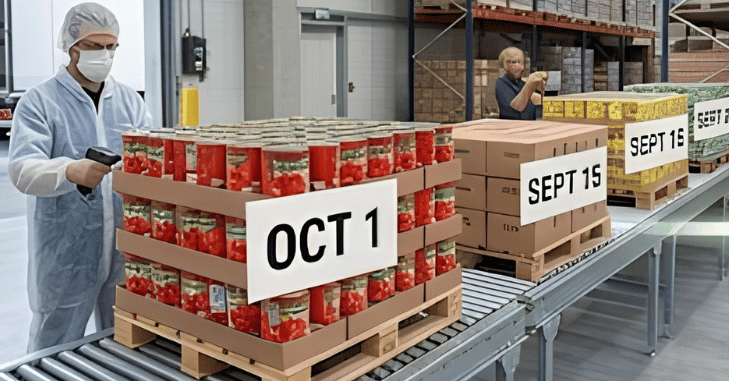
FIFO is important because it helps businesses manage inventory efficiently while improving the accuracy of their financial records. By ensuring that the oldest inventory is sold or used first, FIFO reduces the risk of products becoming obsolete, spoiled, or expired.
This is especially valuable for industries that handle perishable goods, such as grocery stores, restaurants, pharmacies, and healthcare providers, where product freshness and quality are essential. Using FIFO also creates a more organized warehouse by encouraging proper stock rotation, making it easier for employees to locate and move inventory.
How Does FIFO Work
Step 1: Purchase Inventory
A company buys products over time.
Example:
January:
- 100 units at $10 each
February:
- 100 units at $12 each
March:
- 100 units at $15 each
Step 2: Sell Inventory
The company sells 180 units.
FIFO assumes:
- The first 100 units come from January inventory
- The remaining 80 units come from the February inventory
The March inventory stays in stock.
Step 3: Calculate Cost of Goods Sold

COGS equals:
100 × $10 = $1,000
80 × $12 = $960
Total COGS = $1,960
Remaining inventory:
20 × $12 = $240
100 × $15 = $1,500
Ending inventory = $1.74
FIFO Formula
Although FIFO follows a cost-flow assumption rather than a special formula, businesses commonly calculate inventory using:
Ending Inventory
Ending Inventory = Most recently purchased inventory remaining in stock
400 units × $30
Ending inventory consists of the newest products.
FIFO in Inventory Management
FIFO plays a vital role in inventory management by ensuring that the oldest products in stock are sold, used, or distributed before newer inventory. This method helps businesses maintain an efficient inventory flow, prevents older items from remaining on shelves for too long, and reduces the risk of spoilage, expiration, or product obsolescence.
It is particularly important for businesses that handle perishable goods, including supermarkets, restaurants, pharmacies, food manufacturers, and healthcare facilities, where product freshness and quality directly affect customer satisfaction and safety.
Advantages of FIFO

Reduces Waste
One of the greatest advantages of FIFO is its ability to reduce waste by ensuring that older inventory is sold or used before newer stock. This is particularly important for businesses dealing with perishable or time-sensitive products such as food, beverages, pharmaceuticals, cosmetics, and medical supplies.
Better Inventory Accuracy
FIFO provides more accurate inventory records because the remaining inventory is valued using the most recent purchase costs. Since older inventory is removed first, the ending inventory shown on the balance sheet closely reflects current market prices.
FIFO in Investing
FIFO also applies to investment accounting.
If an investor buys shares at different times, FIFO assumes the earliest purchased shares are sold first when calculating capital gains or losses.
Example:
- Buy 100 shares at $50
- Buy another 100 shares at $70
- Sell 100 shares
FIFO assumes the $50 shares were sold first.
FIFO in Computer Science
In computer science, FIFO (First In, First Out) is a fundamental data processing principle that ensures the first item entered into a system is also the first item processed or removed. This concept is commonly implemented using a queue data structure, where data is handled in the same order it arrives.
Just as customers line up at a ticket counter and are served in the order they join, FIFO ensures fairness and maintains the correct sequence of operations within computer systems. FIFO is widely used in operating systems, networking, databases, and software applications.
Best Practices for Using FIFO
Businesses can maximize FIFO by:
- Labeling inventory by arrival date
- Rotating stock regularly
- Conducting routine inventory checks
- Training warehouse employees
- Using inventory management software
- Monitoring expiration dates
Common FIFO Mistakes
Although FIFO is a simple and effective inventory management method, businesses can still make mistakes that reduce its effectiveness and lead to financial losses. One of the most common errors is failing to rotate stock properly, allowing newer inventory to be placed in front of older products. This can cause older items to remain in storage for too long, increasing the risk of spoilage, expiration, or obsolescence.
Who Should Use FIFO?
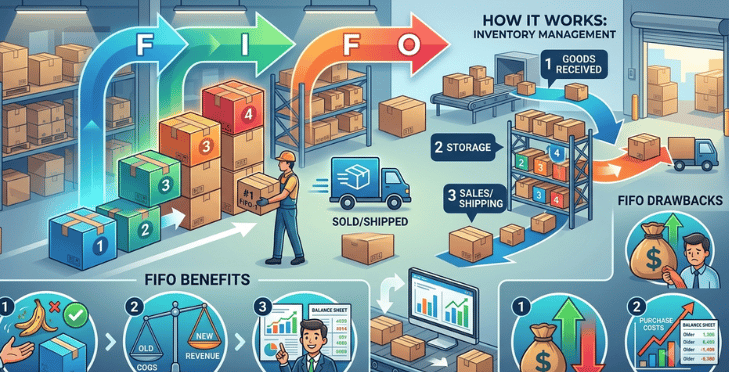
FIFO is ideal for:
- Grocery stores
- Restaurants
- Pharmacies
- Manufacturers
- Retail businesses
- Food distributors
- Medical suppliers
- E-commerce warehouses
- Consumer goods companies
Conclusion
FIFO (First In, First Out) is a proven and highly effective inventory management and accounting method that helps businesses ensure older inventory is sold or used before newer stock. What Does FIFO Refer To? By following this logical inventory flow, organizations can reduce waste, prevent product expiration, improve warehouse efficiency, and maintain accurate inventory records.
Because FIFO closely reflects the actual movement of goods in most industries, it is widely accepted under major accounting standards and trusted by businesses around the globe. Beyond accounting, FIFO has practical applications in retail, manufacturing, healthcare, food service, investing, logistics, and computer science, demonstrating its versatility across different fields.
Want to know about What Is an IUL Account? A Complete Guide to Indexed Universal Life Insurance, How It Works, Benefits, Risks, Cash Value Growth, and Tax Advantages Check out our Real Estate category.
FAQs
“FIFO” refers to First In, First Out, meaning the oldest inventory items are sold or used before newer inventory.
FIFO helps businesses reduce waste, improve inventory control, and produce more accurate financial statements.
During periods of rising prices, FIFO often results in a lower cost of goods sold, which can increase reported profits.
FIFO is considered one of the best inventory methods for businesses dealing with perishable products because it helps minimize spoilage and expiration.
FIFO is also used in warehouse management, healthcare, manufacturing, logistics, investing, and computer science.