
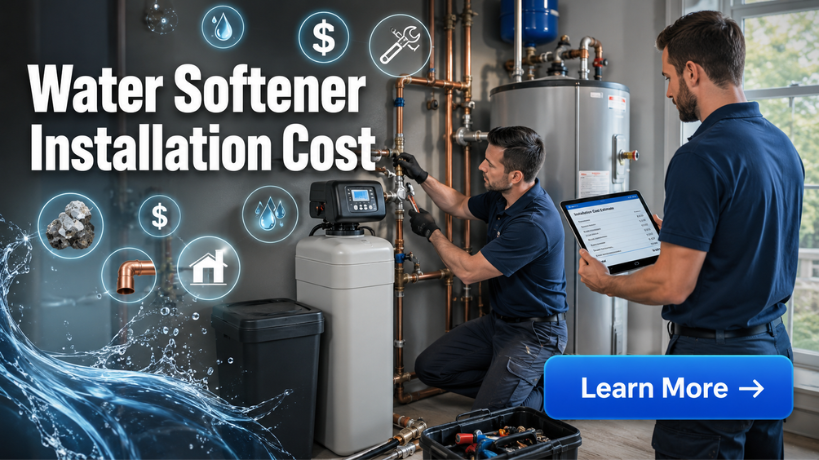
Hard water can cause mineral buildup in pipes, shorten appliance lifespan, leave spots on dishes, and reduce the effectiveness of soaps and detergents. Installing a water softener is an effective way to protect your plumbing, improve water quality, and extend the life of household appliances.
In this guide, you’ll learn everything about water softener installation cost, including average prices, labor costs, system types, key cost factors, and practical money-saving tips to help you choose the right system for your home and budget.
| Category | Average Cost (USD) |
| Total Water Softener Installation Cost | $1,000 and $3,000 |
| Water Softener Unit Cost | $400–$2,500+ |
| Labor Cost | $300–$1,200 |
| First-Time Water Softener Installation Cost | $1,200–$3,500 |
| Replacement Water Softener Installation Cost | $600–$2,300 |
| Plumbing Modifications | $200 to $1,500 |
| Electrical Work (if needed) | $150 and $1,000 |
| Annual Maintenance Cost | $100–$300/year |
| Installation Time | 1.5 to 4 hours |
| Saving Tip | Compare quotes, choose the right-sized system, and perform regular maintenance. |
Water Softener Installation Cost
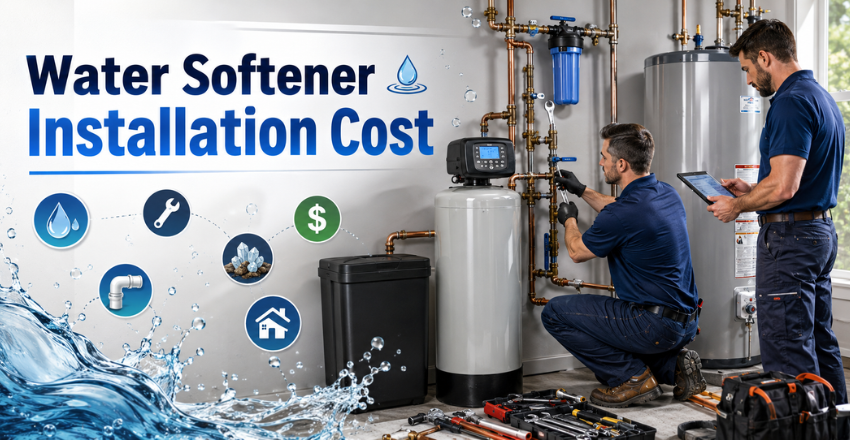
The water softener installation cost typically ranges between $1,000 and $3,000, including both the unit and professional installation. Basic systems for small households cost considerably less, while premium dual-tank or salt-free systems designed for larger homes can exceed $5,000.
Here’s a general cost breakdown:
| Installation Type | Average Cost |
| Water softener unit only | $300 to $3,000 |
| Professional installation | $300–$1,500 |
| Plumbing modifications | $200 to $1,500 |
| Electrical work (if needed) | $150 and $1,000 |
| Drain line installation | $200–$500 |
| Permit fees | $50–$150 |
| Complete installation | $1,000 and $3,000 |
Although the upfront investment may seem significant, a properly installed water softener can reduce appliance repairs, improve plumbing efficiency, and extend the life of water heaters, washing machines, and dishwashers.
What Is Included in Water Softener Installation?
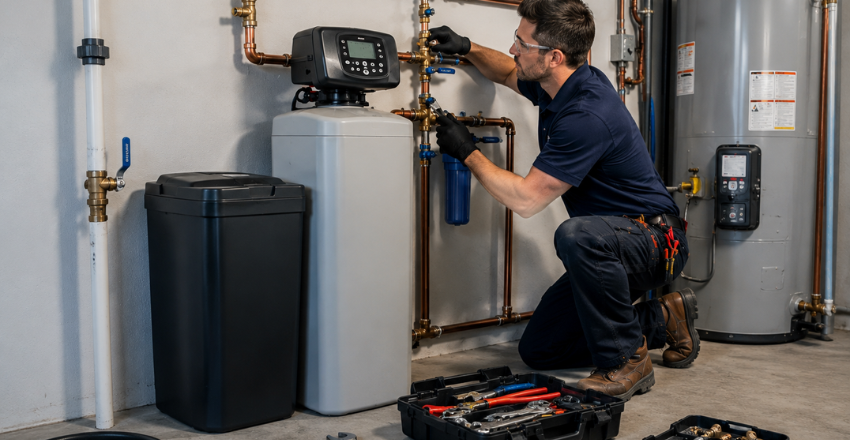
Professional installation usually includes much more than simply connecting the unit.
Most installation packages include:
- Delivery of the water softener
- Plumbing connections
- Water line modifications
- Drain line installation
- Bypass valve installation
- Leak testing
- System startup
- Programming the control valve
- Water hardness adjustment
- Final inspection
Some contractors also include the first bag of salt and homeowner training.
Water Softener Unit Costs
The cost of the softener itself represents the largest portion of your investment.
Budget Models
Price Range:
$400–$800
Features include:
- Basic digital controls
- Single-tank operation
- Small resin capacity
- Suitable for apartments or small homes
Mid-Range Systems
Price Range:
$800–$1,800
These systems usually include:
- Higher grain capacity
- Digital demand regeneration
- Better efficiency
- Improved resin quality
- Lower salt consumption
Premium Water Softeners
Price Range:
$2,000–$4,500+
Premium systems often include:
- Twin-tank operation
- Wi-Fi monitoring
- Smart leak detection
- Ultra-efficient regeneration
- Large household capacity
- Longer warranties
Labor Costs for Water Softener Installation
Professional plumbers generally charge:
- $75–$200 per hour
Most installations require:
- 3–6 hours
Average labor costs:
$300–$1,200
Complex projects involving plumbing relocation or additional electrical work can take a full day or longer.
Water Softener Installation Cost by Home Size
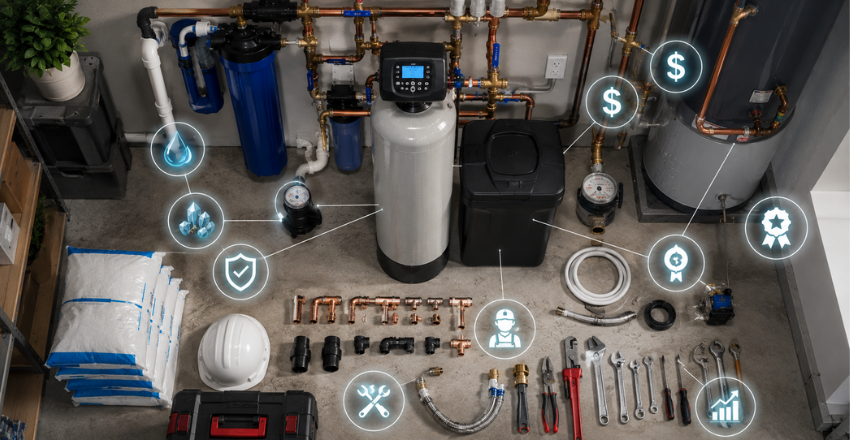
Larger homes require larger-capacity systems.
| Home Size | Installed Cost |
| Apartment | $500–$1,200 |
| 1–2 bedrooms | $700–$1,800 |
| 3 bedrooms | $1,000–$2,500 |
| 4 bedrooms | $1,500–$3,500 |
| Large luxury homes | $2,500–$6,000 |
Cost by Water Hardness Level
Water hardness significantly influences the size of the system required.
| Water Hardness | Recommended System | Average Cost |
| Slightly hard | Small softener | $700–$1,300 |
| Moderately hard | Medium system | $1,000–$2,000 |
| Very hard | Large capacity | $1,800–$3,500 |
| Extremely hard | Premium dual tank | $3,000–$6,000 |
Types of Water Softeners
Ion Exchange Water Softeners
These are the most popular systems.
Advantages:
- Removes calcium and magnesium
- Highly effective
- Proven technology
- Affordable
Disadvantages:
- Requires salt
- Needs periodic maintenance
Salt-Free Water Conditioners
Instead of removing minerals, these systems reduce scale formation.
Benefits:
- No salt
- Minimal maintenance
- Environmentally friendly
- No wastewater during regeneration
However, they do not technically soften water.
Dual-Tank Water Softeners
Ideal for large families.
Advantages include:
- Continuous soft water supply
- High efficiency
- Better for high water usage
- Longer service life
They cost more but perform exceptionally well.
Magnetic Water Descalers
These compact devices attach to existing pipes.
Pros:
- Low installation cost
- Easy installation
- No maintenance
Cons:
- Mixed performance
- Less effective on very hard water
First-Time Installation vs Replacement
Replacing an existing softener is usually cheaper.
| Installation Type | Average Cost |
| Replacement | $700–$2,000 |
| First-time installation | $1,200–$3,500 |
First-time installations often require:
- New plumbing
- Drain installation
- Electrical outlet
- Water testing
- Additional fittings
Factors That Affect Water Softener Installation Cost
Several variables influence the final price.
System Capacity
Higher grain capacity equals higher cost.
Typical capacities:
- 24,000 grains
- 32,000 grains
- 48,000 grains
- 64,000 grains
- 80,000+ grains
Larger systems cost more but regenerate less frequently.
Plumbing Accessibility
Easy access to the main water line lowers labor costs.
Difficult installations may involve:
- Tight crawl spaces
- Finished basements
- Concrete walls
- Long pipe runs
Drain Requirements
Many systems require a nearby drain for regeneration discharge. If no drain exists, installers may need to create one, increasing labor costs.
Electrical Needs
Some modern systems require:
- Dedicated electrical outlets
- GFCI protection
- New wiring
Electrical upgrades add to the installation cost.
Water Testing
Professional water analysis costs:
$50–$300
Testing ensures the softener is correctly sized for your home’s water conditions.
Permit Fees
Some municipalities require permits for plumbing modifications.
Typical costs:
$50–$250
Additional Installation Costs
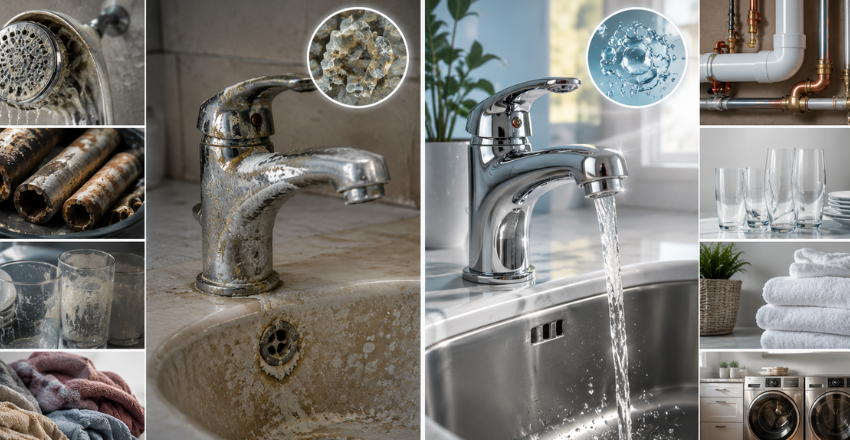
Extra services may include:
| Additional Service | Average Cost |
| Water testing | $50–$300 |
| Old system removal | $100–$300 |
| New drain installation | $150–$500 |
| Shut-off valve replacement | $75–$250 |
| Pipe replacement | $200–$1,000 |
| Electrical outlet installation | $150–$400 |
DIY vs Professional Installation
DIY Installation
Cost:
$50–$300 for materials
Advantages:
- Saves labor costs
- Flexible schedule
- Good for experienced homeowners
Disadvantages:
- Plumbing mistakes
- Warranty issues
- Risk of leaks
- Time-consuming
Professional Installation
Advantages include:
- Licensed workmanship
- Proper sizing
- Warranty protection
- Code compliance
- Leak testing
- Faster completion
For most homeowners, professional installation is worth the added cost.
Ongoing Maintenance Costs
Water softeners require regular maintenance.
Typical annual expenses include:
| Maintenance Item | Annual Cost |
| Salt | $60–$180 |
| Resin cleaner | $20–$50 |
| Professional inspection | $100–$250 |
| Minor repairs | $50–$300 |
Average yearly maintenance:
$150–$400
How Long Does Installation Take?
Most installations take:
- 3–6 hours for replacements
- 6–10 hours for first-time installations
Complex plumbing modifications may require an entire day.
Signs You Need a Water Softener
You may need a water softener if you notice white spots on dishes, soap scum, dry skin, stiff laundry, scale buildup on faucets, poor soap lather, reduced water heater efficiency, or frequent appliance repairs. These are common signs of hard water.
Benefits of Installing a Water Softener
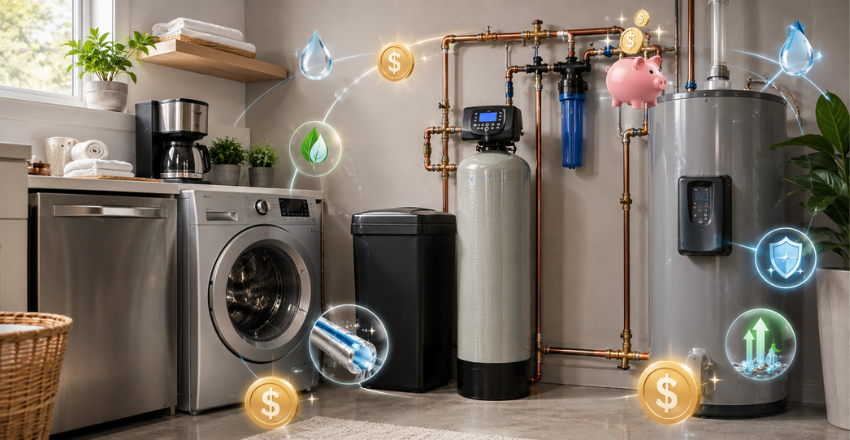
A quality water softener offers several long-term advantages.
Protects Plumbing
Soft water prevents mineral buildup inside pipes, helping maintain water pressure and reducing costly plumbing repairs.
Extends Appliance Life
Water heaters, dishwashers, washing machines, and coffee makers operate more efficiently and last longer when protected from scale buildup.
Improves Cleaning
Soft water helps soaps and detergents dissolve better, resulting in cleaner dishes, brighter laundry, and easier bathroom cleaning.
Softer Skin and Hair
Many homeowners notice smoother skin, shinier hair, and less dryness after switching to softened water.
Saves Energy
Scale buildup forces water heaters to work harder. Removing mineral deposits improves energy efficiency and lowers utility bills.
Reduces Cleaning Products
Because soap lathers more effectively in soft water, you’ll use less detergent, shampoo, and household cleaners over time.
How to Save Money on Water Softener Installation
Installing a water softener doesn’t have to break your budget. Consider these money-saving strategies:
- Compare quotes from at least three licensed installers.
- Choose the right system size—oversizing can increase costs unnecessarily.
- Install during promotional or off-season periods when contractors may offer discounts.
- Bundle installation with other plumbing upgrades.
- Ask about manufacturer rebates or financing options.
- Replace an old unit instead of relocating plumbing if possible.
- Perform simple maintenance yourself, such as refilling salt and cleaning the brine tank.
- Select a demand-initiated regeneration model to reduce water and salt consumption.
Choosing the Right Water Softener
Before making a purchase, evaluate the following factors:
- Household size and daily water usage
- Water hardness level
- Available installation space
- Initial budget and long-term operating costs
- Maintenance preferences
- Local water quality
- Warranty coverage
- Smart features and efficiency ratings
A properly sized system provides better performance, lower operating costs, and a longer service life.
Is a Water Softener Worth the Cost?
For many homeowners, the answer is yes. While the upfront water softener installation cost can range from several hundred to several thousand dollars, the long-term savings often outweigh the initial investment. Reduced appliance repairs, lower energy consumption, fewer plumbing issues, and decreased spending on soaps and cleaning products can add up over the life of the system.
Homes with very hard water benefit the most, as softened water helps protect plumbing infrastructure and improves overall household comfort. If you plan to stay in your home for several years, installing a quality water softener is typically a worthwhile investment.
Conclusion
Understanding water softener installation cost helps you plan your budget and choose the best system for your home’s needs. Most homeowners can expect to invest $1,000 to $3,000 for a professionally installed water softener, though premium systems with advanced features or extensive plumbing work may cost more.
By comparing quotes and choosing the right-sized system, you can lower installation costs while protecting your plumbing and appliances. A quality water softener is a smart long-term investment that improves water quality, boosts efficiency, and helps reduce maintenance expenses.
Apart from that, if you want to know more about Garbage Disposal Installation Cost: Complete Guide To Prices, Labor, Replacement, Factors & Money-Saving Tips then visit our Business category.
FAQs
Depending on the kind, size, and features, water softener systems can range in price from $1000 to $3,000. In addition to the $150 to $1,000 cost of installation labor, there are additional expenses for plumbing adjustments and licenses ($50–$150).
By keeping limescale from building up, a water softener improves the efficiency of your appliances and lowers the need for expensive repairs or replacements.
Hard water mineral accumulation, poor maintenance, and mechanical failures are some of the causes of water softener issues.
They preserve pipework, increase lather, and prolong the life of appliances. However, they need constant upkeep, such as salt refills, and are expensive to install.