

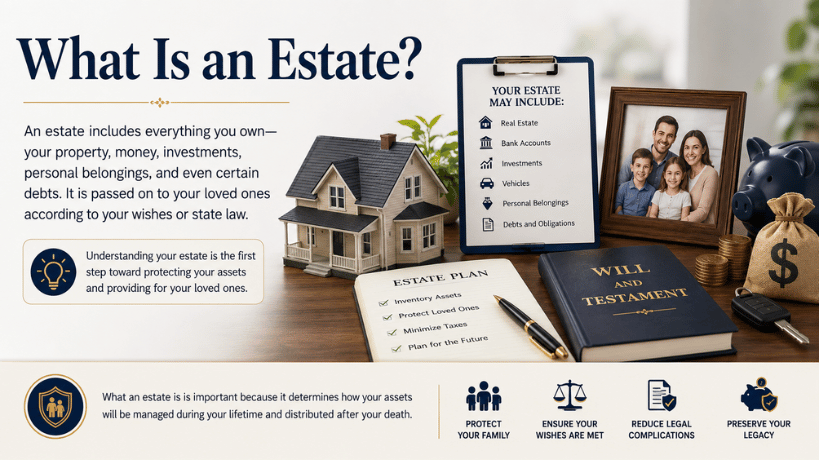
Estate planning is an essential part of financial and legal preparation, yet many people mistakenly believe it is only necessary for the wealthy. In reality, every individual has an estate, regardless of the size of their assets. Whether you own a home, maintain a savings account, operate a business, or possess valuable personal belongings, your estate represents everything you own and owe.
What is an estate? encompasses everything you own, including real estate, bank accounts, investments, retirement funds, vehicles, business interests, and personal belongings, as well as certain debts and financial obligations.
An estate includes all the property, financial accounts, investments, business interests, and personal belongings you own, along with any debts or legal obligations attached to them. It can also help preserve wealth, simplify asset transfers, and provide peace of mind for both you and your beneficiaries.
| Topic | Summary |
| Definition | An estate is everything a person owns and owes, including assets, property, investments, and liabilities. |
| What is an estate? | Every individual who owns property, money, or personal belongings has an estate. |
| Assets Included | Real estate, bank accounts, investments, retirement funds, vehicles, business interests |
| Assets Usually Excluded | Life insurance with named beneficiaries, POD/TOD accounts, jointly owned property |
| Liabilities | Mortgages, loans, credit card debt, taxes, medical bills, and other outstanding |
| Types of Estates | Probate estate, taxable estate, gross estate, and net estate. |
| Purpose of Estate Planning | Protect assets, reduce probate delays, minimize taxes, avoid family disputes, and ensure your wishes are followed. |
| Probate | The legal process of validating a will, paying debts, and distributing estate assets to beneficiaries. |
| Without a Will | State intestacy laws determine how the estate is distributed, which may not reflect the deceased’s wishes. |
| When to Hire an Estate Attorney | When creating a will or trust, handling probate, owning multiple properties |
| Common Estate Planning Mistakes | Not creating a will, failing to update |
| Key Takeaway | Proper estate planning protects your wealth, simplifies asset distribution |
What Is an Estate?

What is an estate? The total collection of everything a person owns and owes at a particular point in time. It consists of all assets, property, financial accounts, investments, and liabilities that belong to an individual.
Contrary to popular belief, you do not need to be wealthy to have an estate. Whether you own a house, a car, a savings account, retirement funds, or even valuable personal possessions, you already have an estate. In legal and financial terms, an estate includes everything you own at the time of your death.
What Is Included in an Estate?
Real Estate
- Primary residence
- Vacation homes
- Rental properties
- Commercial buildings
- Vacant land
- Agricultural property
Financial Assets
Financial assets may include the following:
- Savings accounts
- Checking accounts
- Certificates of deposit (CDs)
- Investment portfolios
- Mutual funds
- Stocks
What Is Not Usually Included in an Estate?
These commonly include:
- Life insurance policies with named beneficiaries
- Retirement accounts with designated beneficiaries
- Payable-on-death (POD) bank accounts
- Transfer-on-death (TOD) investment accounts
- Jointly owned property with rights of survivorship
- Certain trust assets
What Are Liabilities in an Estate?

An estate includes not only the assets a person owns but also the financial obligations they owe. Common estate liabilities include mortgages, personal loans, credit card balances, medical bills, unpaid taxes, auto loans, and certain business debts. During the estate administration process, the executor or personal representative identifies these outstanding obligations and uses estate funds to pay valid creditors.
Types of Estates
Probate Estate
These often include:
- Property owned solely by the deceased
- Vehicles
- Personal belongings
- Bank accounts without beneficiaries
- Investment accounts without transfer instruction
Benefits of Hiring an Estate Attorney
An estate attorney can provide valuable legal guidance and peace of mind when creating or managing an estate plan. Estate laws can be complex and vary by jurisdiction, so professional advice helps ensure that your documents are legally valid and accurately reflect your wishes.
An experienced estate attorney can help you draft a will, establish trusts, prepare powers of attorney, and create healthcare directives while identifying strategies to minimize legal complications and potential tax burdens.
What Happens to an Estate After Death?
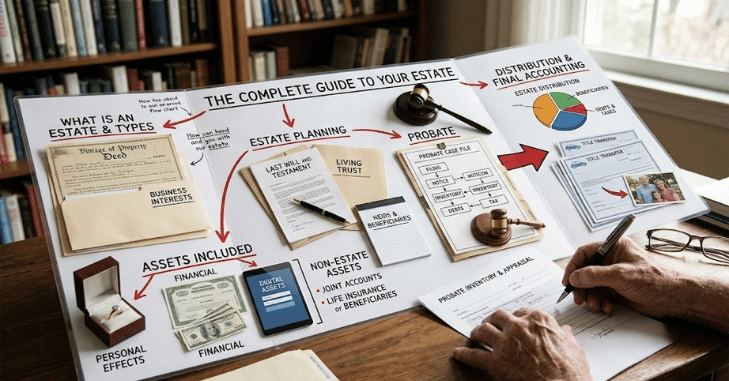
1. The Estate Is Identified
All assets and debts are gathered and documented.
2. The Will Is Reviewed
If a valid will exists, the executor follows the instructions outlined by the deceased.
3. Probate Begins
If probate is required, the court supervises the administration of the estate.
4. Debts Are Paid
Outstanding obligations are settled using estate assets.
5. Assets Are Distributed
The remaining property is transferred to heirs or beneficiaries.
What Happens If There Is No Will?

- State or national inheritance laws determine who inherits the estate.
- A court appoints an administrator.
- Family members may disagree over asset distribution.
- The probate process may take longer.
Creating a legally valid will helps avoid these issues.
When Should You Hire an Estate Attorney?
What is an estate? An attorney can be beneficial whenever you need legal guidance on protecting your assets, preparing for the future, or administering a loved one’s estate. While simple estates may not always require professional assistance, an attorney can help ensure that your estate plan complies with applicable laws and accurately reflects your wishes.
You should consider hiring an estate attorney if you own multiple properties, have significant investments, operate a business, have a blended family, want to establish a trust, or expect disputes among heirs. An estate attorney is also valuable when handling probate, resolving creditor claims, and minimizing potential tax issues.
Common Estate Planning Mistakes

Avoid these mistakes:
- Not creating a trust or will at all
- Failing to update documents after life changes
- Not naming backup beneficiaries
- Ignoring tax implications
- Using unclear or outdated legal documents
Proper legal guidance helps prevent these issues.
Conclusion
What is an estate? The first step toward protecting your assets and securing your family’s future. An estate includes far more than real estate; it encompasses your financial accounts, investments, personal belongings, business interests, digital assets, and even your outstanding liabilities.
With proper estate planning, you can ensure that your property is distributed according to your wishes, reduce the burden on your loved ones, minimize legal complications, and potentially lower taxes and probate costs. Whether your estate is simple or complex,
Creating a legally sound plan and seeking professional guidance when necessary can provide long-term financial security and peace of mind. Planning today helps preserve your legacy and ensures that your loved ones are cared for tomorrow.
Want to know about What Does FIFO Refer To? The Complete Guide to First In, First Out (FIFO), How It Works, Advantages, Disadvantages Check out our Real Estate category.
FAQs
For instance, the law views your new asset as real property if you purchase an apartment.
A person’s property and finances, particularly anything that remains after they pass away, make up their estate. To settle a deceased person’s estate, a court or the deceased person’s will appoints a personal representative.
When you pass away, all of your possessions are subject to an estate tax.
The term “estate” describes a person’s whole collection of belongings, including land. “Property” is a common synonym. holdings and assets.