
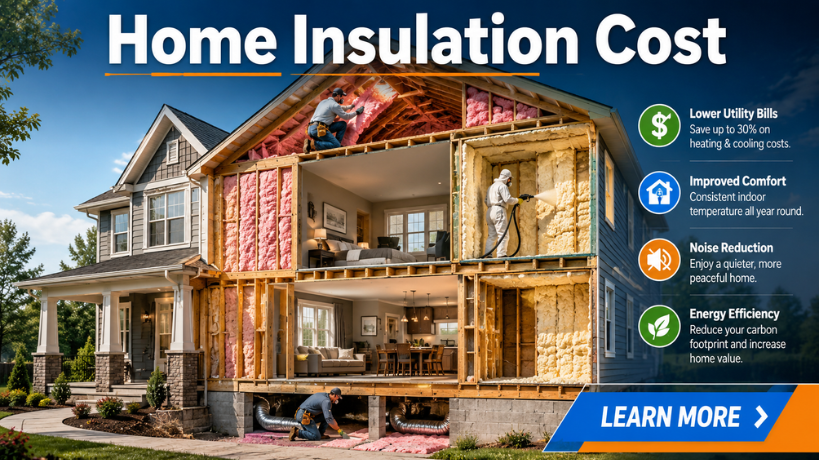
Home insulation is one of the smartest investments homeowners can make to improve energy efficiency, lower utility bills, and increase indoor comfort. Whether you’re building a new home or upgrading an older property, understanding home insulation costs is essential before starting your project.
The total price depends on several factors, including insulation type, material, labor costs, climate, home size, and the areas being insulated. While the initial investment may seem significant, quality insulation often pays for itself through reduced heating and cooling expenses over time.
In this comprehensive guide, you’ll learn everything about home insulation costs, average installation prices, insulation materials, labor expenses, rebates, energy savings, and practical tips for choosing the best insulation for your home.
| Category | Average Cost / Details |
| Average Home Insulation Cost | $1,500–$6000 |
| High-End Cost | $6,000 to $15,000+ |
| Cost Per Square Foot | $0.90–$7.50 (depending on material) |
| Most Affordable Material | Fiberglass Batts ($0.90–$2.00/sq ft.) |
| Premium Material | Closed-Cell Spray Foam ($3.50–$7.50/sq. ft.) |
| Attic Insulation Cost | $1,000–$3,500 |
| Wall Insulation Cost | $1,500–$6,000 |
| Basement Insulation Cost | $1,200–$4,600 |
| Crawl Space Insulation Cost | $1,000–$4,500 |
| Garage Insulation Cost | $1,000–$3,000 |
| Labor Cost | $40–$100 per hour |
| Recommended Attic R-Value | R-30 to R-60 |
| Potential Energy Savings | 10%–30% on heating and cooling bills |
| Available Incentives | Federal tax credits, state rebates, and local utility incentives |
| Best ROI Area | Attic insulation |
| Project Duration | 1–3 days (average home) |
Home Insulation Cost

The home insulation cost depends on the insulation material, home size, labor rates, and installation area. Most homeowners spend $1,500 to $6,500, while larger homes or premium materials can increase the total cost to $10,000 or more.
Here’s a general overview:
| Insulation Project | Average Cost |
| Attic insulation | $1,000 – $3,500 |
| Wall insulation | $1,500 – $5,500 |
| Crawl space insulation | $1,000 – $4,000 |
| Basement insulation | $1,500 – $5,000 |
| Whole-home insulation | $2,500 – $8,500+ |
The final price depends on whether you’re installing insulation during new construction or retrofitting an existing home. Existing homes usually require more labor because old insulation may need to be removed before new materials are installed.
Average Home Insulation Cost Per Square Foot
Most insulation contractors estimate pricing based on square footage.
| Insulation Type | Cost Per Square Foot (Installed) |
| Fiberglass batts | $0.90 – $2.00 |
| Blown-in fiberglass | $1.20 – $2.50 |
| Cellulose | $1.50 – $3.50 |
| Spray foam (Open-cell) | $2.00 – $4.50 |
| Spray foam (Closed-cell) | $3.50 – $7.50 |
| Rigid foam board | $2.50 – $6.00 |
| Mineral wool | $1.80 – $4.00 |
The more energy-efficient the insulation, the higher the upfront investment, but premium materials often provide greater long-term savings.
Factors That Affect Home Insulation Cost
Several variables determine the total installation cost.
1. Size of Your Home
Larger homes require more insulation material and additional labor.
For example:
- 1,000 sq. ft. home: $1,500–$3,500
- 1,500 sq. ft. home: $2,000–$5,000
- 2,000 sq. ft. home: $2,800–$6,500
- 3,000 sq. ft. home: $4,000–$10,000
2. Insulation Material
Material selection has one of the biggest impacts on pricing. Fiberglass remains the most affordable option, while spray foam offers the highest energy efficiency but comes with a higher installation cost.
3. Installation Area
The installation area affects the overall insulation cost. Common areas include attics, walls, basements, crawl spaces, floors, garages, and ceilings. Attics are usually the least expensive to insulate because they are easier to access, and proper insulation helps improve energy efficiency.
4. Labor Costs
Professional installation typically accounts for 30% to 50% of the total project cost.
Labor rates vary depending on:
- Region
- Accessibility
- Existing insulation removal
- Installation complexity
Expect labor rates between $40 and $100 per hour.
5. Removal of Old Insulation
Old insulation may contain mold, moisture damage, pests, or contamination.
Removal costs generally range from:
- Small attic: $500–$1,200
- Medium home: $1,000–$2,500
- Large home: $2,500–$5,000
Home Insulation Materials and Costs

Choosing the right insulation material depends on your climate, budget, and energy goals.
Fiberglass Insulation
Fiberglass is the most common insulation used in residential construction.
Pros
- Affordable
- Easy to install
- Fire-resistant
- Widely available
Cons
- Lower R-value than spray foam
- Can settle over time
- Less effective against air leaks
Average Cost: $0.90–$2.00 per sq. ft.
Blown-In Cellulose
Made from recycled paper products treated for fire resistance.
Pros
- Eco-friendly
- Excellent attic insulation
- Fills gaps effectively
Cons
- Can settle over time
- Moisture-sensitive
Average Cost: $1.50–$3.50 per sq. ft.
Spray Foam Insulation
Spray foam creates an airtight seal while providing exceptional insulation.
Open-Cell Spray Foam

- Lower cost
- Flexible
- Good soundproofing
Average Cost: $2.00–$4.50 per sq. ft.
Closed-Cell Spray Foam
- Highest R-value
- Moisture-resistant
- Adds structural strength
Average Cost: $3.50–$7.50 per sq. ft.
Mineral Wool
Mineral wool is made from natural stone and recycled steel.
Benefits include:
- Excellent fire resistance
- Soundproofing
- Water resistance
- Mold resistance
Average Cost: $1.80–$4.00 per sq. ft.
Rigid Foam Board
Often installed in basements, foundations, and exterior walls.
Advantages:
- High R-value
- Moisture resistant
- Durable
Average Cost: $2.50–$6.00 per sq. ft.
Home Insulation Cost by Area

Attic Insulation Cost
The attic is one of the most cost-effective areas to insulate.
Average Cost: $1,000–$3,500
Benefits include:
- Lower heating bills
- Cooler summers
- Reduced HVAC workload
Wall Insulation Cost
Installing insulation inside finished walls requires additional labor.
Average Cost: $1,500–$5,500
Methods include:
- Blown-in insulation
- Spray foam
- New construction batts
Basement Insulation Cost
Basements lose considerable heat during winter.
Average Cost: $1,500–$5,000
Rigid foam and spray foam are common choices.
Crawl Space Insulation Cost
Insulating crawl spaces helps reduce moisture problems.
Average Cost: $1,000–$4,000
Garage Insulation Cost
Many homeowners insulate garages to improve comfort.
Average Cost: $1,000–$3,000
Labor Cost for Home Insulation
Labor expenses depend on the complexity of the installation.
Professional installers may charge:
- Hourly: $40–$100
- Per square foot: $0.50–$2.50
Projects involving spray foam generally cost more because specialized equipment and trained technicians are required.
Home Insulation R-Value Explained
R-value measures insulation’s resistance to heat flow. Higher R-values provide better thermal performance. Typical recommendations include:
| Area | Recommended R-Value |
| Attic | R-30 to R-60 |
| Exterior Walls | R-13 to R-21 |
| Floors | R-25 to R-30 |
| Basement | R-11 to R-19 |
| Crawl Space | R-19 to R-30 |
Your local climate largely determines the ideal R-value.
DIY vs Professional Installation
DIY Installation
Suitable for:
- Fiberglass batts
- Small attic projects
Advantages:
- Lower upfront cost
- Flexible schedule
Disadvantages:
- Installation mistakes
- Safety concerns
- Reduced efficiency
Professional Installation
Recommended for:
- Spray foam
- Whole-home insulation
- Wall cavities
- Large projects
Benefits include:
- Correct installation
- Better energy efficiency
- Warranty protection
- Faster completion
Home Insulation Rebates and Tax Credits
Many homeowners can reduce home insulation costs through federal tax credits, state rebate programs, local utility incentives, and manufacturer promotions. Checking available programs before starting your project can help lower your upfront expenses and make insulation upgrades more affordable.
How Much Can You Save on Energy Bills?

Proper insulation can reduce heating and cooling costs by 10% to 30%, depending on the home’s current insulation level and local climate.
Example annual savings:
| Annual Energy Bill | Estimated Savings |
| $1,500 | $150–$450 |
| $2,000 | $200–$600 |
| $3,000 | $300–$900 |
Over the lifespan of the insulation, these savings often exceed the original installation cost.
Signs Your Home Needs New Insulation
You may need new insulation if you notice high energy bills, drafts, uneven temperatures, cold walls, moisture or mold, pest damage, or an overworked HVAC system. Replacing old insulation can improve comfort and lower energy costs.
Tips to Reduce Home Insulation Costs
You can lower home insulation costs by comparing contractor quotes, insulating the attic first, choosing the right material for your climate, sealing air leaks, and taking advantage of available rebates or tax credits. Scheduling installation during off-peak seasons and replacing only damaged insulation can also help reduce overall expenses.
How to Choose the Best Insulation?
The ideal insulation depends on your home’s design, local weather, and budget.
Choose fiberglass if:
- You want an affordable solution.
- You’re insulating accessible areas.
- Budget is your priority.
Choose cellulose if:
- You prefer eco-friendly materials.
- You’re insulating existing walls or attics.
Choose spray foam if:
- Maximum energy efficiency is your goal.
- Air sealing is important.
- You have room in your budget for higher upfront costs.
Choose mineral wool if:
- Fire resistance matters.
- You want better sound insulation.
- Moisture resistance is a priority.
Choose rigid foam board if:
- You’re insulating foundations or basements.
- Moisture control is important.
Is Home Insulation Worth the Cost?
For most homeowners, the answer is yes. Proper insulation improves comfort throughout the year, reduces strain on heating and cooling systems, and lowers monthly energy bills. It can also increase your home’s resale value and create a quieter indoor environment by reducing outside noise.
While premium insulation materials require a higher upfront investment, they often deliver greater energy savings and a longer service life. If you plan to stay in your home for several years, insulation is one of the highest-return energy-efficiency upgrades you can make.
Conclusion
Understanding home insulation cost helps you make informed decisions that balance your budget with long-term energy savings. Depending on your home’s size, insulation material, and installation area, costs can range from a few thousand dollars for a targeted upgrade to several thousand for a whole-home project.
Choosing the right insulation, hiring qualified professionals, and using available rebates can maximize your investment. Quality insulation lowers energy bills, improves comfort, and provides long-term savings for years to come.
Apart from that, if you want to know more about Home Insulation Cost: Everything You Need To Know About Prices, Materials, Labor, Rebates & Energy Savings then visit our Business category.
FAQs
Depending on your house’s size and the type of insulation you choose, adding insulation can cost $1,400 to $4,000 or more.
Yes, wrapping a house with external wall insulation (EWI) is highly effective, especially for older homes.
Particularly for external wall insulation, the initial outlay can be substantial. Risk of Moisture Issues: Inadequate insulation can retain moisture and cause wood rot or mold growth.
Fiberglass and cellulose are the most extensively used and reasonably priced options for sealing air leaks, although spray foam is generally thought to be the most effective overall.