


The best airlines to fly depend on where you are going and what you value most. For long-haul international comfort and service, Singapore Airlines, Qatar Airways, Emirates, ANA and Japan Airlines are the names that most consistently top passenger rankings. Within the United States, Delta has a strong reputation for reliability, Alaska Airlines for friendly service, JetBlue for economy comfort and Southwest for simple, flexible fares. The right choice for you comes down to your route, your budget and whether you care more about the seat, the schedule or the price.
Below are 12 airlines worth considering, what each one is best for, and how to judge an airline yourself using the data that actually matters: safety, on-time performance, fees and how it treats you when things go wrong.
Best airlines to fly: the 12 top choices compared
| Airline | Best for | Main hub | Key strength |
|---|---|---|---|
| Singapore Airlines | Premium long-haul | Singapore Changi | Service and cabin quality |
| Qatar Airways | Business class | Doha | Qsuite business cabin |
| Emirates | Global connections | Dubai | Large A380 fleet and network |
| ANA | Service to Asia | Tokyo | Consistency and comfort |
| Japan Airlines | Punctuality | Tokyo | Strong on-time record and roomy economy |
| Turkish Airlines | Worldwide reach | Istanbul | Very large number of countries served |
| Air New Zealand | South Pacific | Auckland | Economy Skycouch and friendly service |
| Delta Air Lines | U.S. reliability | Atlanta | Operational performance |
| United Airlines | International from the U.S. | Chicago, Newark, Denver and others | Largest route map of U.S. carriers |
| Alaska Airlines | West Coast and Hawaii | Seattle | Service and loyalty program |
| JetBlue | Economy comfort | New York JFK, Boston | Legroom, seatback TV, free Wi-Fi |
| Southwest Airlines | Budget-friendly flexibility | Point-to-point network | No change fees |
Airline products change often, so check current seat maps, fees and policies on the airline’s site before you book.
Best airlines for international travel
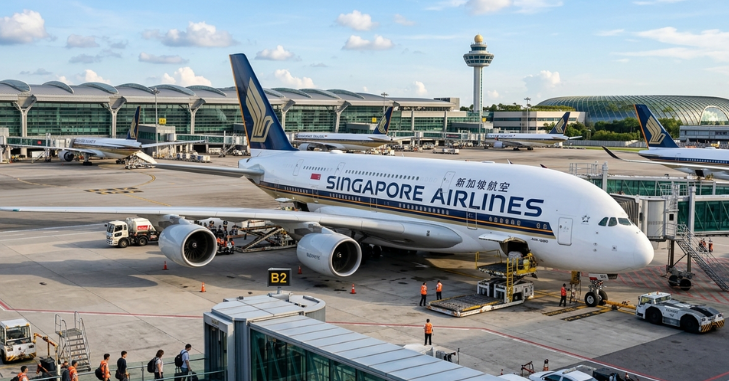
Singapore Airlines
Singapore Airlines is regularly ranked among the world’s best carriers for crew service, food and cabin quality in every class. Its hub, Changi Airport, is itself widely regarded as one of the most pleasant airports for connections. It operates some of the longest nonstop flights in the world, including routes from the U.S. East and West Coasts.
Qatar Airways
Qatar Airways is best known for Qsuite, a business-class seat with a closing door that many travelers rate as one of the best in the sky. Economy is solid too, and Hamad International in Doha is an efficient connecting hub for trips to the Middle East, Africa, South Asia and beyond.
Emirates
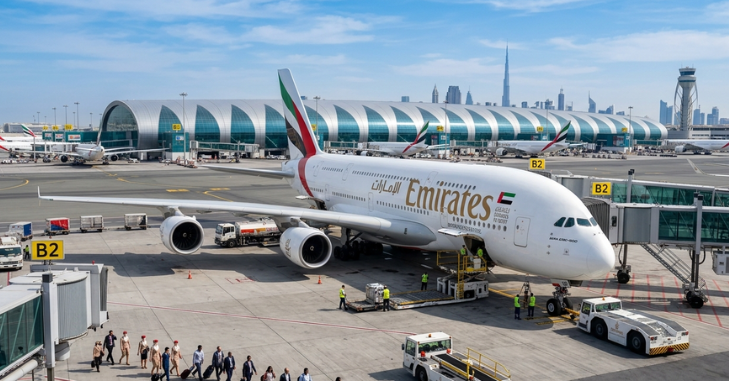
Emirates connects six continents through Dubai and flies the world’s largest fleet of Airbus A380s, which are quiet and spacious. Its ice entertainment system has a huge library, and premium passengers get perks such as chauffeur service in many cities.
ANA and Japan Airlines
Japan’s two main carriers are known for precision, cleanliness and courteous service. Japan Airlines frequently appears near the top of global on-time performance rankings, and its long-haul economy seats are more generously spaced than many rivals’. ANA is a Star Alliance member, and JAL is in oneworld, which matters if you collect miles with a U.S. partner.
Turkish Airlines
Turkish Airlines serves more countries than almost any other airline, so it is often the easiest way to reach smaller destinations in Africa, Central Asia and Eastern Europe with one connection in Istanbul. Fares are frequently competitive, and long layovers can include a free city tour through its Touristanbul program when it is running.
Air New Zealand
Air New Zealand is a favorite for the long flight across the Pacific, with the Economy Skycouch letting couples or families turn a row of seats into a flat surface. If a trip down under is on your list, our guide to the best time to go to New Zealand helps with timing.
Best airlines for domestic U.S. travel

Delta Air Lines
Delta consistently ranks at or near the top of U.S. airlines for on-time performance and low cancellation rates. SkyMiles members get free Wi-Fi on most domestic flights, and its Atlanta hub offers connections almost anywhere in the country. Fares can be higher than rivals, so it is best when reliability is worth paying for.
United Airlines
United has the largest international network of the U.S. carriers, with hubs including Newark, Chicago, Denver, Houston, San Francisco and Washington Dulles. Its Polaris business class is competitive on long-haul routes, and it has been rolling out faster satellite Wi-Fi across its fleet.
Alaska Airlines
Alaska Airlines has long scored well for customer satisfaction and has one of the more generous loyalty programs, with the ability to earn and redeem on oneworld partners. It is especially strong on the West Coast, and after its acquisition of Hawaiian Airlines it offers more options to Hawaii. Planning a Pacific Northwest trip? See the best time to visit Oregon.
JetBlue
JetBlue offers one of the roomier standard economy cabins among U.S. airlines, plus free Wi-Fi, seatback entertainment and complimentary snacks. Its Mint business product is a strong value on transcontinental and some transatlantic routes.
Southwest Airlines
Southwest has been popular for its simple fares and lack of change fees, which makes it attractive if your plans might shift. Be aware that Southwest has made big changes: it ended its long-standing free checked bags policy for most fares in 2025 and has moved from open seating to assigned seats. Check the current fare rules before assuming it is the cheapest option once bags are included.
How to judge an airline yourself
Rankings are a starting point, but these checks tell you more about your specific trip:
- Safety: major airlines in the U.S., Europe, the Gulf and East Asia all operate to very high safety standards. For less familiar carriers, check whether the airline is IATA Operational Safety Audit (IOSA) registered and whether it appears on the EU Air Safety List of banned carriers.
- On-time performance: the U.S. Department of Transportation publishes an Air Travel Consumer Report with on-time rates, cancellations, mishandled bags and complaints for U.S. airlines. Flight-tracking apps also show the history of a specific flight number.
- Total cost: compare the fare plus bags, seat selection and change fees. Basic economy fares often exclude seat choice and may exclude a full-size carry-on.
- Aircraft and seat: the same airline can fly very different planes on different routes. Look at the seat map and aircraft type for your flight.
- Network and alliance: an airline with a hub near you, or in the same alliance as your loyalty program, often beats a “better” airline that needs an extra connection.
Which airline is best for you?
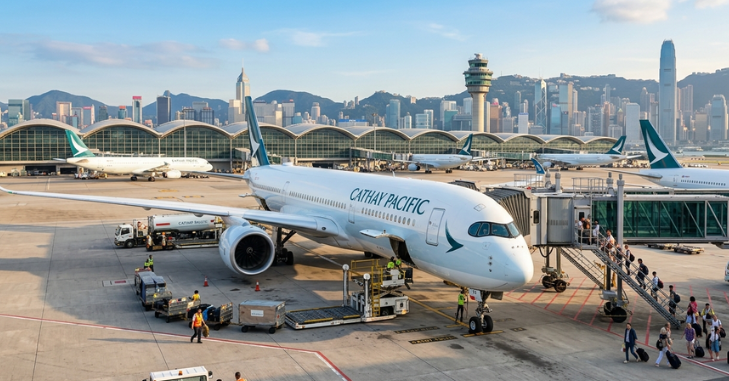
Business travelers usually value on-time performance, a large schedule on their regular routes, lounge access and reliable Wi-Fi. Loyalty to one airline or alliance tends to pay off through upgrades and status perks.
Families should look for free or low-cost seat selection so the family can sit together, clear child and infant policies, and generous bag allowances. U.S. airlines have faced growing pressure from regulators to seat young children next to an adult without extra fees, and several now guarantee it on most fares.
Budget travelers should compare the total trip cost rather than the headline fare. Ultra-low-cost carriers can be good value if you travel light, but fees for bags, seats and even printing a boarding pass add up. A travel rewards card can offset some of these costs; our overview of the second-best credit card explains how travel perks work.
Know your rights when flights go wrong
Under U.S. Department of Transportation rules, if an airline cancels your flight or makes a significant change, such as a long delay, and you choose not to travel, you are entitled to a refund in your original form of payment, not just a voucher. Many airlines also offer meal vouchers or hotel stays for delays within their control; the DOT’s airline customer service dashboard shows what each U.S. carrier commits to. When flying to or from Europe, EU261 rules can also entitle you to compensation for long delays and cancellations.
Tips for a smoother flight on any airline
- Book the earliest flight of the day, which is less likely to be hit by knock-on delays.
- Leave enough connection time, especially at large hubs or when changing terminals.
- Download the airline’s app for gate changes, rebooking and digital boarding passes.
- Check bag rules and measure your carry-on before you leave home.
- Keep your passport, visas and any required travel authorizations organized and valid.
For destination ideas and more trip planning, explore our Travel category.
Frequently asked questions
What is the best airline in the world?
Singapore Airlines and Qatar Airways are the carriers most often named best in the world in passenger surveys, with Emirates, ANA and Japan Airlines close behind. The best one for you depends on your route and priorities.
Which airline is best for domestic travel in the U.S.?
Delta is often rated best for reliability, Alaska for service, JetBlue for economy comfort and Southwest for flexible fares without change fees.
What is the safest airline to fly?
Major airlines in regions with strong regulators all have excellent safety records, and commercial flying is very safe overall. For unfamiliar carriers, check IOSA registration and the EU Air Safety List.
Are premium airlines worth the extra cost?
On long-haul flights, a better seat, food and service can make a real difference to how you feel on arrival. On short domestic flights, the cheapest reliable option is usually fine.
How can I find the best airfare deals?
Compare fares on several sites, set price alerts, stay flexible on dates and airports, and always add up bag and seat fees before deciding.