

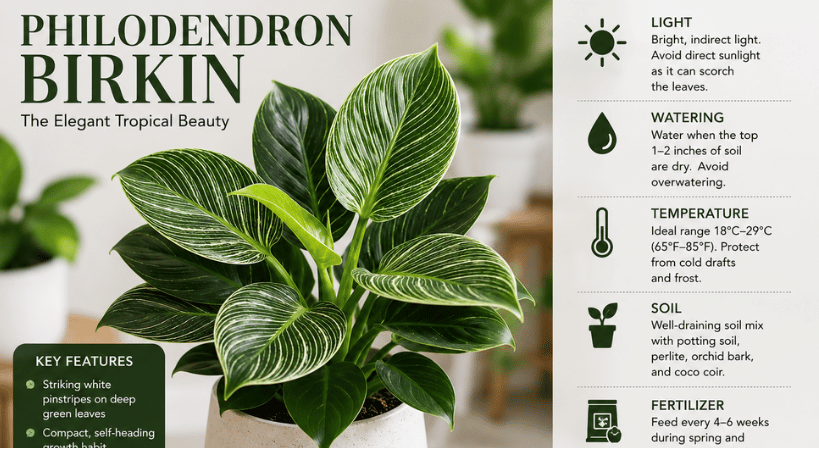
The Philodendron Birkin is one of the most elegant and visually striking houseplants, admired by plant lovers around the world. Recognized for its deep green, glossy leaves adorned with delicate creamy-white pinstripes, this tropical beauty brings a modern, luxurious feel to any indoor space.
Its unique variegation pattern, combined with a compact and upright growth habit, makes it a perfect choice for both beginners and experienced plant collectors. What makes the Philodendron Birkin truly special is its balance between beauty and simplicity.
Unlike many exotic plants that require complex care routines, the Birkin thrives with relatively simple maintenance, making it well-suited for homes, offices, and apartments. It not only enhances interior décor but also contributes to a calming and refreshing indoor environment.
| Section | Key Information |
| What is it? | A cultivated Philodendron variety, likely a mutation of Rojo Congo |
| Botanical Classification | Family: Araceae, tropical foliage plant, indoor ornamental cultivar |
| Origin | Developed from a genetic mutation, it gained popularity worldwide in the houseplant market. |
| Appearance | Deep green glossy leaves with creamy white stripes, each leaf unique |
| Growth Habit | Compact, self-heading, bushy upright growth (not a climber) |
| Variegation | White striping changes and increases as the plant matures |
| Light Needs | Bright indirect light; avoid direct sun. |
| Watering | Water when the top 1–2 inches are dry; avoid overwatering. |
| Temperature | Ideal: 18°C–29°C (65°F–85°F) |
| Soil | Well-draining mix (soil + perlite + bark + coco coir) |
| Fertilizer | Every 4–6 weeks in the growing season |
| Popularity | Loved for its beauty, compact size, and easy maintenance |
| Propagation | Stem cuttings using a node in water or moist soil |
| Problems | Yellow leaves, brown tips, drooping due to watering or humidity issues |
| Benefits | Air purification, décor enhancement, stress reduction |
| Facts | Mutation origin, unique leaf patterns, collector’s plant |
What Is a Philodendron Birkin?

The Philodendron Birkin is a unique cultivar of the Philodendron family. Unlike many other philodendron varieties, it is not naturally found in the wild. Instead, it is believed to have originated as a spontaneous mutation of the Philodendron Rojo Congo.
Its most distinctive feature is its dark green foliage marked by elegant white or cream-colored stripes. As the plant matures, the variegation becomes more pronounced, creating a beautiful contrast that makes each leaf appear like a work of art.
Botanical Classification
Understanding the botanical classification of the Philodendron helps plant enthusiasts better understand its origins and place within the plant kingdom. Although the Birkin is a cultivated variety rather than a naturally occurring wild species, it still belongs to the well-known Araceae family, which includes many popular tropical houseplants.
Members of this family are recognized for their attractive foliage, adaptability to indoor environments, and tropical origins. The Philodendron inherits many desirable characteristics from its philodendron relatives, including glossy leaves, moderate growth, and easy-care requirements. For the full picture, read Newborn Horse Hooves.
Origin and History
The Philodendron Birkin is relatively new compared to many traditional houseplants. Plant experts believe it developed through a genetic mutation in the Philodendron Rojo Congo. Because of this mutation, the plant began producing leaves with unique white striping patterns.
The unusual appearance quickly attracted attention in the houseplant market. Within a few years, it became one of the most popular decorative indoor plants worldwide.
Physical Appearance
Stunning Variegated Leaves
- Deep green in color
- Decorated with thin white or cream stripes
- Glossy and smooth
- Oval to heart-shaped
- Thick and durable
Compact Growth
Unlike climbing philodendrons, the Birkin grows in a self-heading manner. This means it develops into a bushy, upright plant rather than producing long vines. Its compact structure makes it perfect for tabletops, office desks, shelves, and decorative plant displays.
Changing Variegation
One fascinating aspect of the Birkin is that its variegation changes over time. Younger leaves may emerge with minimal striping and gradually develop more pronounced white or cream-colored lines as they mature. In some cases, newly unfurled leaves display patterns entirely different from those of older foliage, making each plant unique.
How to Care for a Philodendron Birkin?

Best Locations
- Near east-facing windows
- A few feet away from south-facing windows
- Bright rooms with filtered sunlight
Avoid direct sunlight, which may scorch the leaves.
Watering Tips
- Water when the top 1–2 inches of soil feel dry.
- Reduce watering during winter.
- Avoid waterlogged soil.
- Ensure proper drainage.
Overwatering is one of the most common causes of plant problems.
Temperature
The ideal temperature range is
- 65°F to 85°F (18°C to 29°C)
Protect the plant from:
- Cold drafts
- Sudden temperature changes
- Frost
Fertilization
Feed the plant during the growing season.
Recommended schedule:
- Once every 4–6 weeks during spring and summer
- Use a balanced liquid houseplant fertilizer
Reduce feeding during fall and winter.
Why Is Philodendron Birkin So Popular?

The Philodendron Birkin has become one of the most popular houseplants in recent years, attracting plant enthusiasts, interior designers, and beginners alike. Its growing popularity is largely due to its unique combination of beauty, ease of care, and versatility. Unlike many rare tropical plants that require constant attention, the Birkin offers an exotic appearance while remaining relatively simple to maintain.
Propagation Methods
Stem-cutting propagation is the most popular and effective method for multiplying a Philodendron. This technique allows gardeners to create new plants from a healthy parent plant while preserving the beautiful variegated characteristics that make the Birkin so desirable.
Step 1: Select a Healthy Stem
Choose a healthy stem that contains at least one node, as nodes are the points where new roots will develop. Look for a vigorous stem with healthy leaves and no signs of disease, pests, or damage.
Step 2: Use Clean, Sterilized Pruning Shears
Using sharp and sterilized pruning shears, make a clean cut just below the node. Sterilizing your tools helps prevent the spread of bacteria or fungal infections that could affect the cutting.
Step 3: Place the Cutting in Water or Moist Soil
After taking the cutting, place it in a container of clean water or directly into a pot filled with moist, well-draining soil. Ensure that the node is submerged in water or covered by the soil, as this is where roots will emerge.
Common Problems and Solutions
Yellow Leaves
- Overwatering
- Poor drainage
- Root rot
Brown Leaf Tips
- Low humidity
- Underwatering
- Excess fertilizer
Drooping Leaves
- Water stress
- Temperature fluctuations
- Root issues
Benefits of Growing Philodendron Birkin
Growing a Philodendron Birkin offers a wide range of benefits that go beyond its attractive appearance. This stunning houseplant is not only a decorative element but also a functional addition to indoor spaces, making it a popular choice among plant lovers.
Its unique combination of beauty, low-maintenance care, and environmental advantages makes it an ideal plant for homes, offices, and indoor gardens. One of the main benefits of the philodendron is its ability to enhance interior décor.
Interesting Facts About Philodendron Birkin
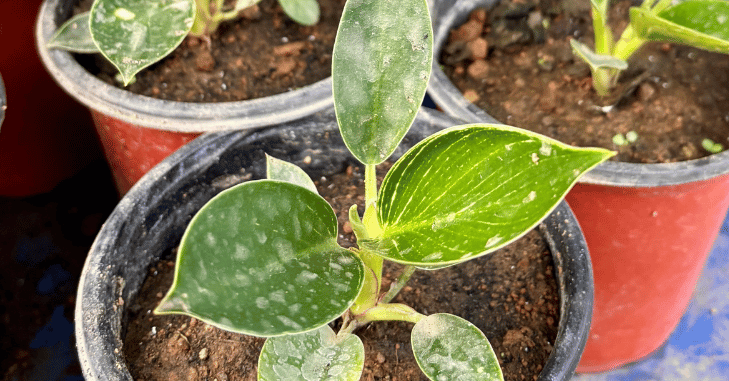
- It is believed to have originated from a mutation rather than natural breeding.
- No two leaves display identical striping patterns.
- The plant’s variegation may change throughout its life.
- It remains one of the most popular philodendrons among collectors.
- Mature specimens can become exceptionally striking centerpieces.
Conclusion
The Philodendron Birkin is more than just a decorative houseplant; it is a living piece of art that brings elegance, freshness, and natural beauty into any space. With its unique white-striped foliage, compact growth habit, and ever-changing variegation, it remains one of the most desirable indoor plants worldwide.
Despite its exotic appearance, the Birkin is surprisingly easy to care for, making it an excellent choice for beginners and experienced plant enthusiasts alike. With proper light, moderate watering, suitable soil, and occasional feeding, this plant can thrive for years and continue to reward you with stunning new leaves.
Overall, the Philodendron perfectly combines style, simplicity, and sustainability. Whether used as a home décor centerpiece or part of a larger indoor plant collection, it remains a timeless and rewarding plant that enhances both the visual and emotional atmosphere of any environment.
Want to know about Snackle Box: A Complete Guide to the Trendy Portable Snack Organizer for Travel and Parties Check out our Lifestyle category.
FAQs
Water your philodendron only when the top 1–2 inches of soil feel dry to the touch. This helps maintain a healthy moisture balance around the roots. Avoid keeping the soil constantly wet, as excessive moisture can quickly lead to root rot and other fungal issues.
No, the philodendron does not need direct sunlight to thrive. It performs best in bright, indirect light where it can receive gentle, filtered sunlight throughout the day.
Yes, the Philodendron is an excellent choice for beginners because it is low-maintenance and forgiving compared to many tropical plants.
Yellow leaves are usually a sign of care issues such as overwatering, poor drainage, or early root stress. It can also happen if the plant is sitting in overly wet soil for too long.
No, the Philodendron Birkin is toxic to cats and dogs if ingested because of the calcium oxalate crystals in its leaves. should be kept out of pets’ reach to prevent irritation or digestive discomfort.