

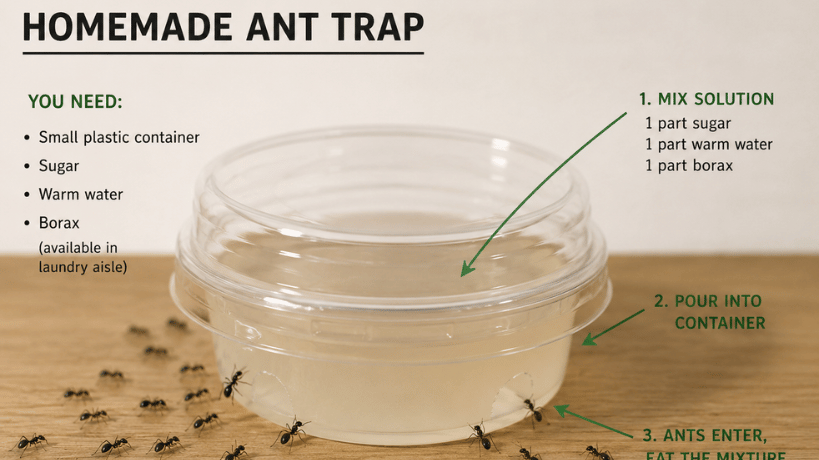
Ant infestations are one of the most common household pest problems, especially in kitchens, pantries, bathrooms, and outdoor living spaces where food, water, and shelter are readily available. While commercial insecticides can provide quick results, many homeowners prefer a homemade ant trap because it is affordable, easy to make, and uses simple ingredients that are already found in most homes.
These DIY traps not only help reduce the number of visible ants but also target the root of the infestation by eliminating the entire colony over time. Unlike sprays that kill only the ants you can see, a well-designed homemade ant trap attracts worker ants with sweet or protein-based bait.
The workers then carry the bait back to the nest, where it is shared with other ants, including larvae and the queen. This slow but effective process helps destroy the colony at its source, making homemade one of the most reliable and budget-friendly long-term solutions for controlling ant infestations.
| Section | Key Points |
| Why Use It? | Affordable, safe for the home, eco-friendly, and eliminates the whole ant colony over time. |
| How It Works | Uses bait to attract ants; worker ants carry it back to the nest, affecting the colony. |
| Best Recipes | Borax-sugar, baking soda-sugar, honey-borax, and peanut butter traps work by poisoning or attracting ants. |
| Natural Traps | Cornmeal, cinnamon, coffee grounds, and lemon juice are used as repellents or barriers. |
| Placement | Kitchen, sinks, doors, windows, pantry, garbage areas, and outdoor trails. |
| Mistakes to Avoid | Cleaning trails too early, using too little bait, wrong placement, using chemical sprays, and impatience. |
| Time to Work | Small colonies: a few days; large infestations: 1–3 weeks. |
| Prevention | Keep the home clean, store food in sealed containers, fix leaks, and seal cracks and entry points. |
| Benefits | Low-cost, safe, and natural; targets the entire colony; reduces chemical use. |
Why Use a Homemade Ant Trap?

Homemade ant traps are a practical and cost-effective solution for dealing with ant problems without relying on harsh chemicals. One of the biggest advantages is that they are made from simple household ingredients, making them affordable and easily accessible.
These traps are also safer for homes with children and pets than many commercial pesticides, as they avoid toxic chemicals yet remain effective against ants. Another key benefit is that homemade ant traps target the entire colony rather than just killing visible ants.
The bait is carried back to the nest by worker ants, which helps eliminate the source of the infestation over time. This makes them more effective in the long run than surface sprays, which only kill ants on contact.
Understanding How Ant Traps Work
Before creating a trap, it helps to understand ant behavior. Ants travel in trails while searching for food. Once a food source is found, worker ants leave scent trails that guide other ants to the location. The most effective homemade traps attract worker ants and allow them to carry the bait back to the colony. This helps reach the queen and other ants hidden in the nest.
Best Homemade Ant Trap Recipes
The best homemade ant trap recipes are simple DIY solutions made with common kitchen ingredients like sugar, borax, honey, or baking soda. These traps work by attracting ants with food while slowly eliminating the entire colony when the bait is carried back to the nest.
Knowing when to use homemade ant traps is important for the best results—start using them as soon as you notice ant trails in your kitchen, on walls, or around food sources, and continue until activity fully stops, usually within a few days to two weeks, depending on the infestation.
Borax and Sugar Ant Trap
- 1 tablespoon borax
- 3 tablespoons sugar
- 1 cup warm water
- Cotton balls or small containers
- Mix the borax, sugar, and warm water thoroughly.
- Soak cotton balls in the mixture.
- Place the cotton balls in shallow containers.
- Position the traps near ant trails, entry points, or nests.
The sugar attracts ants while the borax disrupts their digestive systems. Worker ants carry the mixture back to the colony, helping reduce the population over time.
Baking Soda and Sugar Trap
- Mix the ingredients thoroughly.
- Place small amounts near ant activity.
- Replace the mixture regularly.
The sugar attracts ants, while the baking soda can affect them after they consume it.
Honey and Borax Trap
- 1 teaspoon borax
- 3 teaspoons honey
Peanut Butter Ant Trap
- 1 tablespoon peanut butter
- 1 teaspoon borax
- Mix thoroughly.
- Place in small containers.
- Leave near areas where ants are active.
Natural Homemade Ant Traps

Natural homemade ant traps are simple, chemical-free methods for controlling ants with everyday household ingredients. These remedies are safe, easy to apply, and help reduce ant activity without harsh chemicals.
Cornmeal Trap
Ants are attracted to cornmeal and may carry it back to the nest. Sprinkle small amounts near ant activity areas so they transport it back to the colony.
Cinnamon Barrier
Ground cinnamon can be placed near windows, doors, and cracks where ants enter. Its strong scent helps discourage ants from crossing treated areas.
Coffee Grounds
Used coffee grounds may help repel ants when placed around gardens, patios, and outdoor spaces. They act as a natural deterrent for ant movement.
Lemon Juice Solution
Mix lemon juice with water and spray around entry points. This helps disrupt ant scent trails, making it harder for ants to follow each other and enter your home.
Where to Place Homemade Ant Traps

Proper placement significantly improves effectiveness.
Best locations include:
- Kitchen counters
- Under sinks
- Near windows
- Around door frames
- Pantry areas
- Garbage bins
- Outdoor ant trails
- Garden borders
Avoid placing traps where children or pets can easily access them.
Common Mistakes to Avoid
Many people unknowingly reduce the effectiveness of homemade ant traps by using them incorrectly or inconsistently. One common mistake is cleaning away ant trails too quickly, which can prevent ants from finding and sharing the bait with the colony. Another mistake is placing too little bait or placing it in the wrong locations, away from active ant paths.
Using strong chemical sprays near traps can also be counterproductive, as it may repel ants before they carry the bait back to the nest. Additionally, not being patient enough is a frequent issue, since natural ant control methods often take several days to show results fully.
How Long Does a Homemade Ant Trap Take to Work?
Results vary depending on the size of the colony.
- Initial activity may increase within 24 hours.
- Noticeable reduction often occurs within several days.
- Large colonies may require one to three weeks for significant control.
Patience is important because worker ants need time to transport bait back to the nest.
Preventing Future Ant Infestations
Preventing future ant infestations requires keeping your home clean and eliminating anything that attracts ants. Store food in airtight containers and avoid leaving crumbs or spills on kitchen counters and floors.
Regularly take out the trash and keep bins tightly sealed. Seal cracks, gaps, and entry points around doors, windows, and walls to block ant access. It is also helpful to fix any water leaks, as ants are often drawn to moisture. Maintaining a clean and dry environment significantly reduces the chances of ants returning to your home.
Benefits of Homemade Ant Traps

Homemade ant traps provide an affordable and practical solution for dealing with ant infestations. They allow homeowners to use common household ingredients while avoiding excessive use of commercial pesticides.
When used correctly, these traps can target entire colonies, reduce recurring infestations, and help maintain a cleaner, pest-free home. Their simplicity, low cost, and effectiveness make them a popular choice for natural pest control.
Conclusion
A homemade ant trap is one of the easiest and most economical ways to manage ant problems. Whether you choose a borax-and-sugar bait, a baking soda mixture, or a natural deterrent such as vinegar or lemon juice, consistent use can help reduce ant activity and eliminate colonies.
By combining effective homemade ant remedies with proper sanitation and preventive techniques, homeowners can significantly reduce ant infestations and prevent them from returning. Maintaining cleanliness, sealing entry points, and removing food and water sources helps make the environment less attractive to ants.
Apart from that, if you want to know more about Philodendron Birkin: The Complete Guide to Care, Growth, Benefits, Propagation, and Everything You Need to Know then visit our Lifestyle category.
FAQs
A borax-and-sugar trap is generally considered the most effective because it attracts ants and allows them to carry the bait back to the colony.
Most traps begin showing results within a few days, though larger colonies may take one to three weeks to eliminate.
Some ingredients, such as borax, can be harmful if ingested. Always place traps in locations inaccessible to pets and children.
The bait may not match the ants’ food preference. Try switching between sweet and protein-based baits.
Vinegar helps remove scent trails and repel ants, but it usually does not eliminate an entire colony on its own.

