

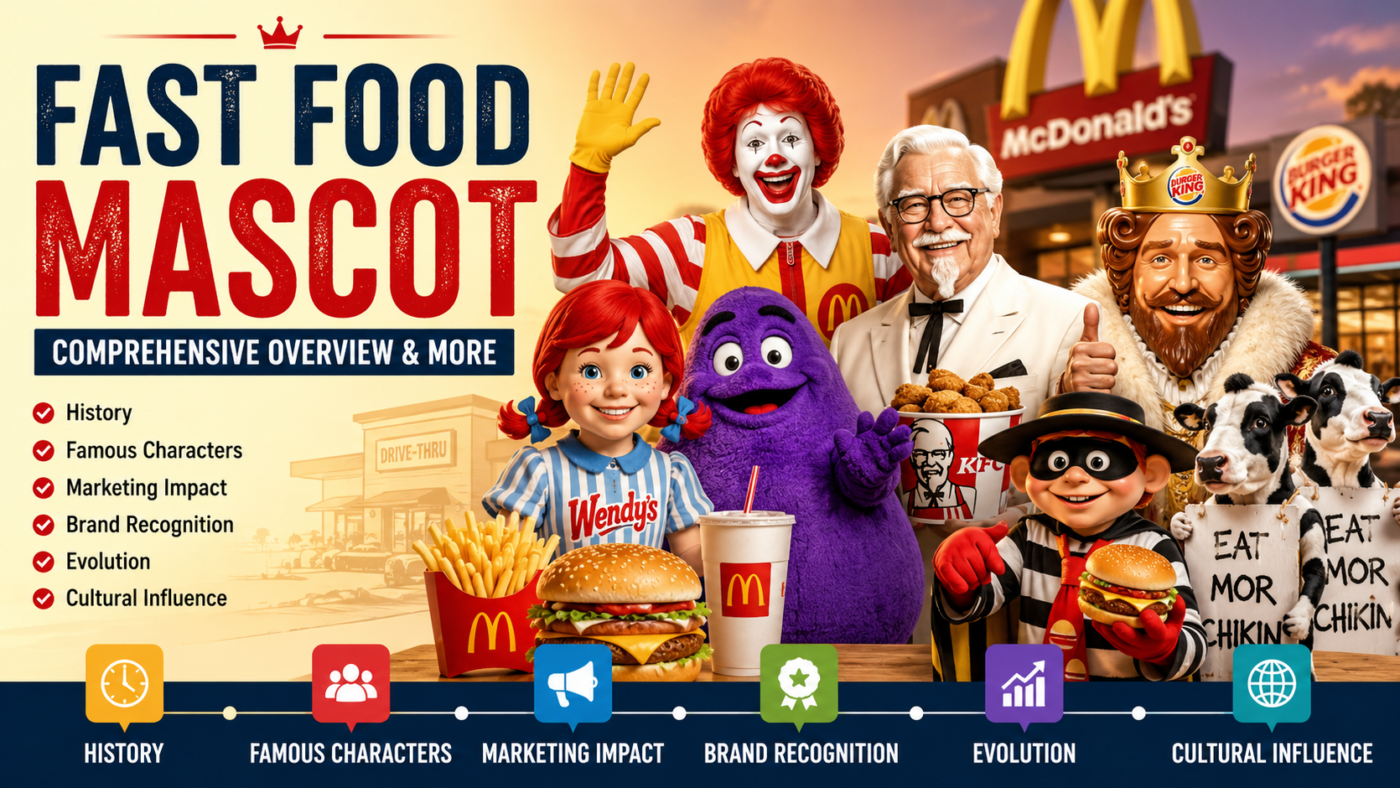
A fast-food mascot is a fictional character, animal, or human figure that represents a fast-food brand. Overall, it acts as the brand’s face, adding personality and making it easier for customers to recognize and connect with the company. Unlike a logo, a fast food mascot has a unique identity that helps customers connect with the brand more deeply and memorably.
Moreover, it is widely used in ads, packaging, and social media to attract attention and strengthen brand recognition. The fast food mascot has become a key part of global marketing, helping brands build loyalty and stand out. Overall, it has evolved from simple illustrations into modern digital characters as advertising trends and technology have changed.
| Section | Summary |
| Definition | A fast food mascot is a fictional character, animal, or human figure representing a fast food brand, helping customers recognize and connect with the company. |
| Importance | It builds brand identity, improves recognition, and creates emotional connections with customers through personality and storytelling. |
| History | Started in the mid-20th century with simple illustrations, later evolved into colorful TV characters in the 1950s–60s, and now exists as digital and social media personalities. |
| Characteristics | Memorable design, friendly personality, Consistency, strong brand association, and adaptability across platforms. |
| Marketing Impact | Used in TV ads, social media, packaging, and promotions to attract attention, increase engagement, and boost sales. |
| Famous Mascots | Ronald McDonald, Colonel Sanders, Burger King, Wendy, Chick-fil-A Cows, Grimace, Hamburglar, Jack Box, and more. |
| Brand Recognition | Helps customers instantly identify brands through repeated exposure, building trust, familiarity, and recall value. |
| Cultural Influence | Becomes part of pop culture through memes, movies, merchandise, nostalgia, and global brand storytelling. |
| Evolution | Transitioned from simple drawings to animated TV characters and now to digital, interactive, and AI-driven mascots. |
What Is a Fast Food Mascot?

A fast food mascot is a fictional character, animated figure, animal, or person created to represent a fast food restaurant or brand. It serves as the public face of the company, helping customers easily recognize the brand while creating a memorable and engaging identity.
Unlike a logo, a fast-food mascot has a unique personality and appearance that make the brand more memorable and relatable. Companies feature mascots in advertisements, on social media, on packaging, and at promotional events to attract customers and strengthen brand recognition.
Additionally, a well-designed fast-food mascot increases brand recognition and encourages customer loyalty. Therefore, many leading fast-food brands have used iconic mascots for decades to strengthen their identities and stand out from competitors.
Characteristics of a Successful Fast Food Mascot
Creating an effective fast food mascot requires careful planning and creativity.
Memorable Appearance
- A mascot should have a unique design that customers immediately recognize.
Friendly Personality
- Customers respond positively to characters that appear welcoming, humorous, or entertaining.
Consistency
- The mascot should maintain a consistent appearance and personality across all marketing channels.
Strong Brand Association
- Customers should instantly associate the mascot with the restaurant.
Adaptability
- Modern mascots need to perform well across television, websites, mobile apps, and social media platforms.
Marketing Impact of the Fast Food Mascot
It significantly influences modern marketing strategies.
Television Advertising
- Mascots make television commercials entertaining and memorable.
Social Media Engagement
- Brands now create humorous posts, videos, and interactive content featuring mascots.
Product Packaging
- Mascots appear on meal boxes, cups, bags, and promotional packaging to reinforce brand recognition.
Seasonal Promotions
- Holiday-themed mascots encourage customers to participate in limited-time promotions.
Customer Interaction
- Many restaurants allow mascots to appear at community events, grand openings, and children’s celebrations.
History of the Fast Food Mascot
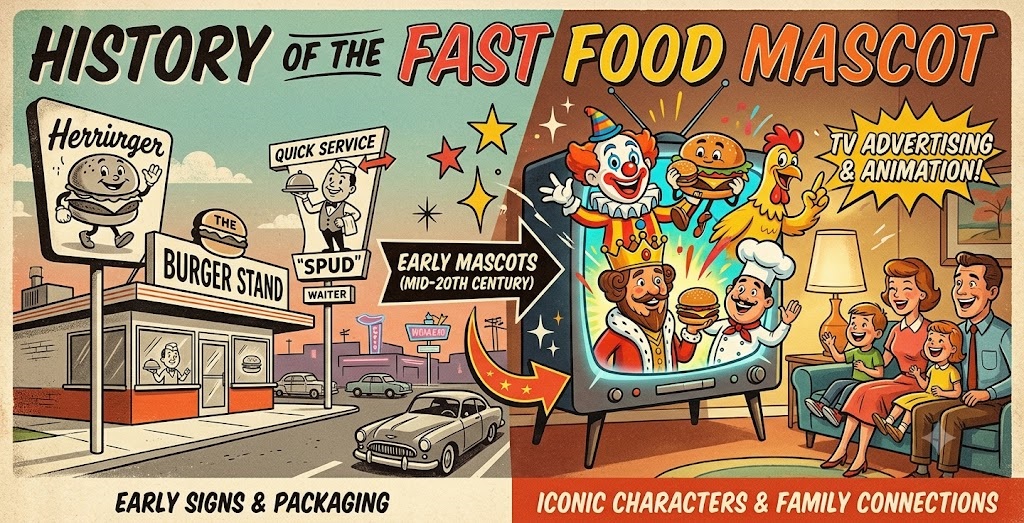
The fast food mascot began in the mid-20th century as restaurants sought ways to stand out in a growing market. Overall, Early mascots were simple images used on signage, packaging, and ads to attract customers and build familiarity.
In the 1950s and 1960s, the fast-food mascot became colorful and animated through television advertising to entertain audiences and promote the food. Moreover, this helped create iconic characters that appealed to children and strengthened emotional connections with families.
Additionally, in the 1950s and 1960s, the fast-food mascot became colorful and animated through TV advertising. Moreover, this helped create iconic characters that attracted children and strengthened family connections.
Why the Fast Food Mascot Matters?
Additionally, a fast-food mascot shapes how customers recognize and remember a brand. By giving the brand a friendly personality, overall, it makes advertising more engaging and builds lasting customer connections.
However, a fast-food mascot attracts families and children with its colorful design and fun personality. Moreover, it also strengthens brand recognition, making the restaurant easier for customers to remember and choose.
Characteristics of a Successful Fast Food Mascot
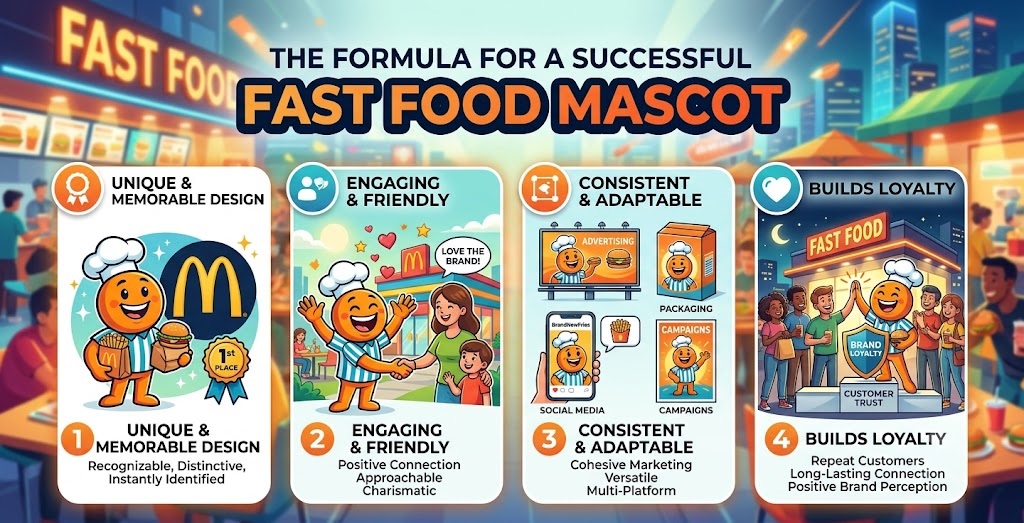
Additionally, a successful fast-food mascot has a unique and memorable design that customers can recognize instantly. Overall, it should reflect the brand’s personality and values while appealing to its target audience.
A friendly and engaging character helps create a positive emotional connection with customers. Over time, Consistency across advertisements, packaging, social media, and promotional materials strengthens brand recognition.
The mascot should also be adaptable to different marketing platforms and campaigns without losing its identity. Above all, an effective strategy leaves a lasting impression that encourages customer loyalty and keeps the brand memorable over time.
Famous Fast Food Mascots
- Ronald McDonald – The iconic clown representing McDonald’s.
- Colonel Sanders – The founder-inspired mascot of KFC.
- The Burger King – The recognizable royal character of Burger King.
- Wendy – The red-haired mascot featured in Wendy’s branding.
- Chick-fil-A Cows – The humorous cows promoting chicken over beef.
- Grimace – The friendly purple character associated with McDonald’s.
- Hamburglar – The mischievous McDonald’s character known for stealing hamburgers.
- Mayor McCheese – A classic McDonald’s mascot with a hamburger-shaped head.
- Jack Box – The oversized mascot representing Jack in the Box.
- Little Caesar – The Roman-inspired mascot of Little Caesars Pizza.
- The Noid – Domino’s former mascot created to promote fast pizza delivery.
- Arby’s Oven Mitt – A playful character used in select Arby’s advertising campaigns.
Marketing Impact of the Fast Food Mascot
Additionally, the fast-food mascot makes advertisements more engaging and memorable for customers. Overall, its unique personality helps brands attract attention and stand out in the competitive fast-food industry.
Companies use across advertising, social media, packaging, and promotional events to maintain a consistent brand image. Overall, they also create emotional connections that make marketing more relatable and encourage long-term customer loyalty.
They help promote new menu items, limited-time offers, and seasonal campaigns to increase customer interest and sales. Overall, a fast-food mascot also drives word-of-mouth marketing through social media shares, memes, and online discussions.
How the Fast Food Mascot Builds Brand Recognition?
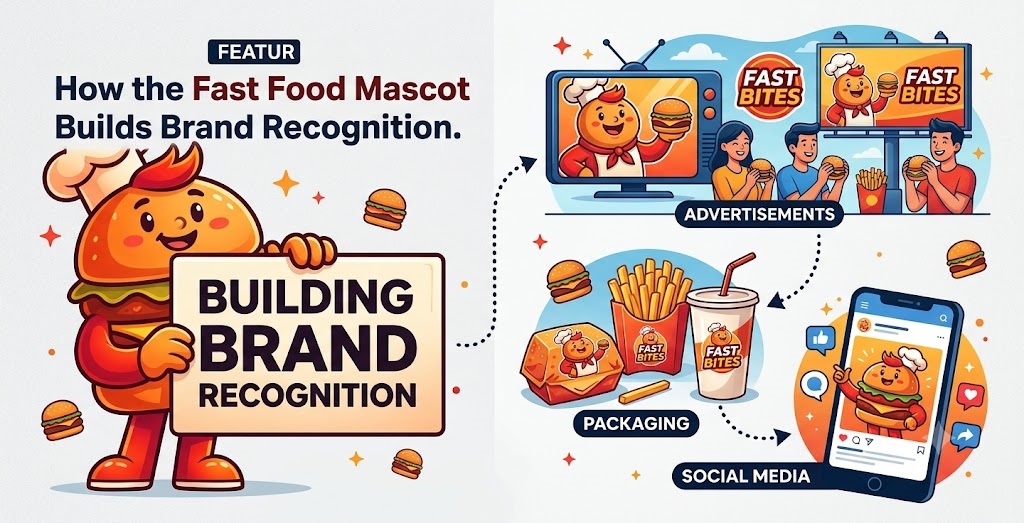
A fast-food mascot builds brand recognition by giving a company a memorable, consistent identity. Through repeated use in ads, packaging, and social media, it becomes strongly associated with the brand’s name and values.
Additionally, its unique design helps a fast-food mascot stand out and makes the restaurant easily recognizable without a logo. Overall, Repeated exposure builds familiarity, trust, and strong brand recall in a competitive market.
Cultural Influence of the Fast Food Mascot
- It often becomes a global pop culture icon recognized beyond its brands.
- They appear in movies, TV shows, memes, and other internet content, thereby increasing their cultural relevance.
- Many mascots influence childhood memories and nostalgia across generations.
- They are frequently used in merchandise like toys, clothing, and collectibles.
- Some mascots adapt to local cultures to connect better with regional audiences.
- They shape modern advertising trends and digital storytelling styles.
- It often becomes a symbol of entertainment and brand identity worldwide.
Conclusion
In conclusion, the fast food mascot plays a key role in modern branding and marketing for restaurant chains worldwide. Overall, it builds brand recognition, emotional connection, and customer loyalty through consistent, engaging storytelling.
The fast-food mascot has evolved from simple illustrations to modern digital characters as media and trends have changed. Overall, its influence goes beyond advertising, shaping culture, entertainment, and everyday consumer experiences across generations.
Its ability to attract attention and strengthen brand identity underscores the long-term importance of the fast-food mascot. Overall, it will continue to evolve with technology, remaining a key driver of marketing success and cultural influence.
Apart from that, if you want to know more about The Ultimate Guide to Scalloped Corn Recipe with Variations, Cooking Tips, Serving Ideas, and Secrets for Perfect Creamy Texture then visit our Food category.
FAQs
Numerous mascots become pop culture icons, appearing in global advertising campaigns, movies, memes, and products.
Indeed, they influence purchasing decisions by fostering emotional appeal, familiarity, and trust, particularly among families and kids.
From straightforward drawings to animated television characters, it has evolved into digital, interactive web personas.
Through TV, social media, packaging, and campaigns, they enhance brand recall, make ads more engaging, and market products.