
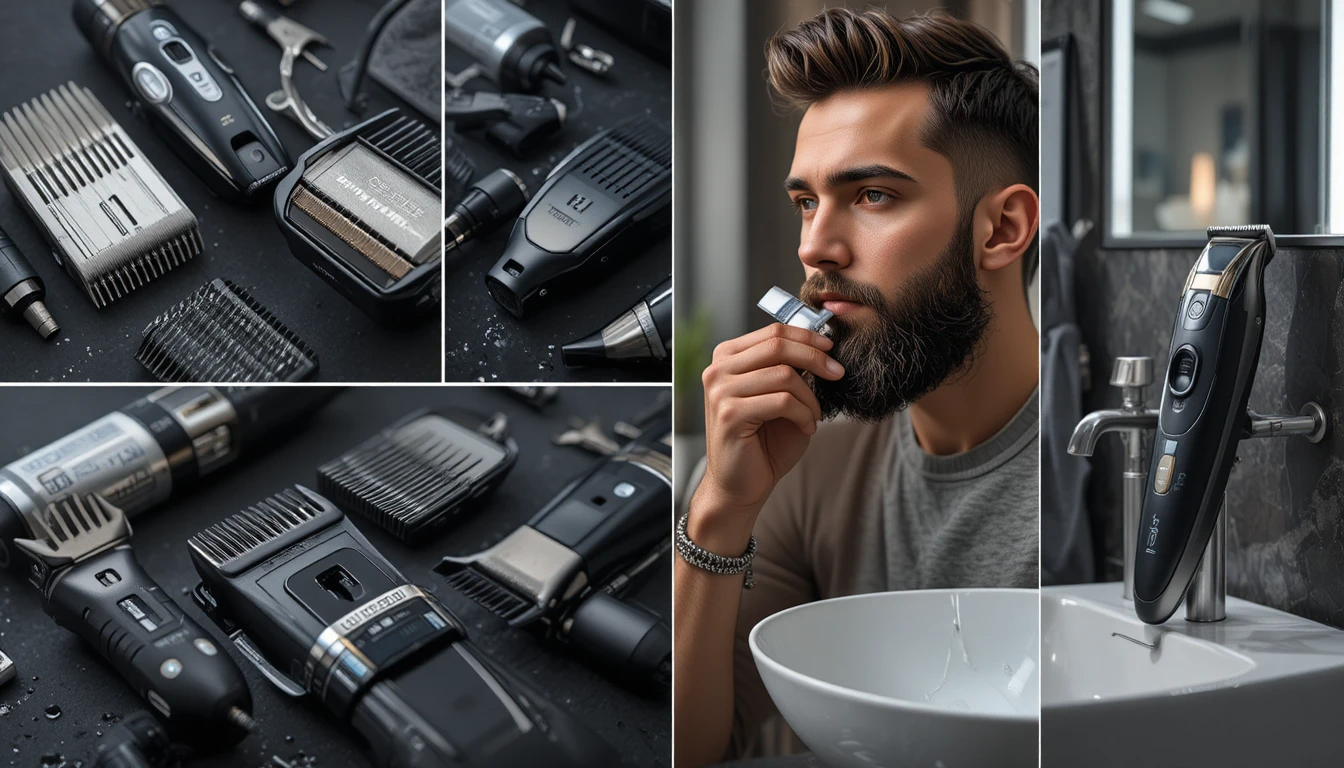
The best beard trimmer for most people has sharp stainless-steel blades, fine length control (a dial or guards in 0.5 to 1 mm steps), at least an hour of cordless runtime and a washable head. The Philips Norelco Multigroom 7000 is a strong all-in-one choice, the Braun Series 9 and Panasonic ER-GB80 excel at precise lengths, the Philips OneBlade Pro is ideal for stubble and edging, and the Andis T-Outliner is the barber’s pick for crisp lines.
This guide groups ten well-regarded trimmers by what they do best, explains which guard length suits each beard style, and covers the features that genuinely matter. Battery figures, settings and included accessories change between model versions, so confirm current specs on the retailer listing before you buy.
Why a quality beard trimmer matters

A good trimmer cuts cleanly on the first pass instead of tugging hairs, holds one exact length so your beard grows out evenly, and lets you shape cheek and neck lines without booking a barber. Cheap trimmers with weak motors tend to snag on thick or coarse hair, which means more passes, more irritation and patchier results. Spending a little more usually buys sharper blades, a steadier motor under load and finer length steps, which together make the difference between a beard that looks deliberate and one that looks neglected.
The four main types of beard trimmer
| Type | What it is | Best for |
|---|---|---|
| Dedicated beard trimmer | One head with an adjustable comb or dial | Keeping a short to medium beard at an exact length |
| All-in-one groomer | A handle with several heads and guards for beard, hair, nose and body | People who want one tool for everything |
| Hybrid blade (OneBlade style) | A thin, flexible blade that trims, edges and shaves | Stubble, short beards and clean edges |
| T-blade outliner | A wide, fine-toothed blade, usually used without guards | Sharp lines, necklines and detail work |
Most people need either a dedicated trimmer or an all-in-one for length, and some add a hybrid blade or outliner for edges. If you only buy one tool, choose based on the beard you actually wear most of the year.
10 best beard trimmer options for every grooming need
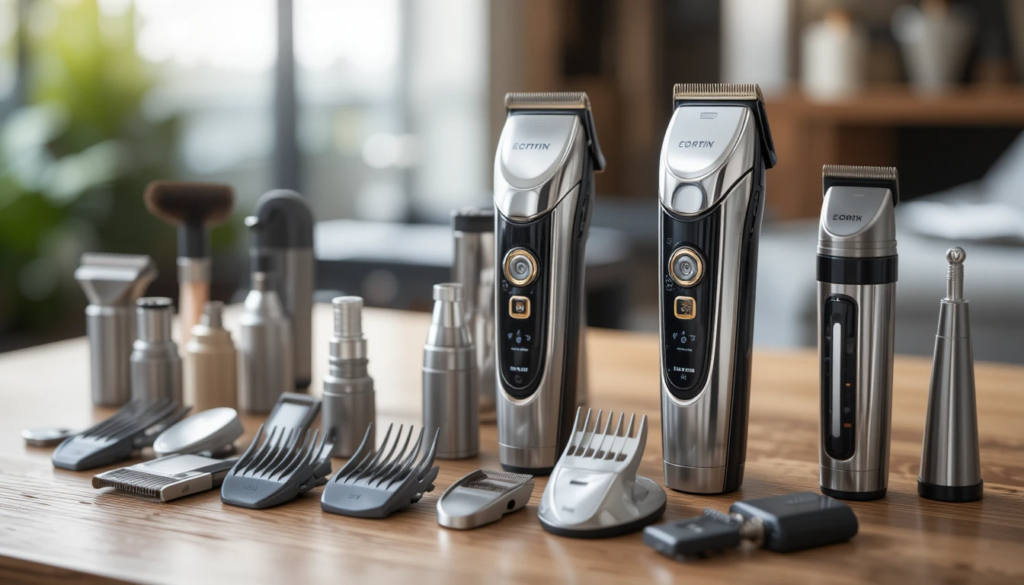
1. Philips Norelco Multigroom Series 7000: best all-in-one
This kit includes a wide range of heads and guards for beard, hair, nose, ears and body, driven by self-sharpening steel blades that never need oiling. Philips rates the battery for several hours of use, so you charge it rarely. It is excellent value if you want to replace several tools with one. The trade-off is that the beard guards adjust in bigger steps than a dial trimmer, so very precise length tweaks are harder.
2. Braun Beard Trimmer Series 9: best for precise lengths
Braun’s flagship trimmer uses a precision dial with dozens of fine length settings, letting you move up or down in small increments. It is waterproof for easy rinsing and ships with extra heads for detail work. It sits at the premium end of the price range, but it suits anyone who keeps a short to medium beard at a very specific length and notices every millimeter.
3. Wahl Stainless Steel Lithium Ion+: best for thick beards
Wahl is a long-standing barber brand, and this stainless-steel kit is known for a strong motor that powers through dense hair without bogging down, plus long runtime. It includes a range of guards and detail attachments. It is not designed for shower use, so clean it with the supplied brush rather than under the tap.
4. Panasonic ER-GB80: best for dense facial hair
Panasonic pairs sharp angled blades with a fast linear motor and a length dial offering many small steps. It works wet or dry, which suits people who trim with gel or in the shower. Runtime is shorter than some rivals, so it fits people who trim in regular, quick sessions rather than long ones.
5. Remington beard kit: best budget pick
Remington’s beard kits, such as the MB4045, use a zoom wheel or combs for length control and often add extras like a beard comb and scissors at a modest price. They will not match premium models for power or finish, but they are a sensible starting point if you are growing your first beard and are not sure how much grooming you will do.
6. Andis Professional T-Outliner: best for lines and edges
A barbershop staple, the T-Outliner uses a wide T-blade that cuts very close for sharp cheek lines, necklines and fades. The classic version is corded. It is a detailing tool rather than a length trimmer, so most people pair it with a guard-based trimmer for bulk work.
7. Philips OneBlade Pro: best for stubble and edging
The OneBlade’s thin, dual-sided blade trims, edges and shaves close without the razor burn many people get from traditional blades, and it works wet or dry. The Pro version adds an adjustable comb with multiple length settings. The blade is a replaceable part, so budget for replacement blades every few months.
8. Braun BT7240: best mid-range everyday trimmer
This model brings a precise length dial and sharp metal blades at a lower price than the Series 9. It usually includes a detail trimmer and a mini foil shaver for finishing edges, making it a balanced all-rounder for regular beard maintenance.
9. Wahl Aqua Blade: best for shower grooming
Designed to be fully waterproof, the Aqua Blade can be used in the shower and rinsed clean under the tap. It comes with a range of guards and suits people who prefer trimming wet hair or want the quickest possible clean-up.
10. Panasonic ER-SB40: best for coarse beards
Built around a high-speed motor and sharp blades, this Panasonic model targets thick, coarse facial hair, aiming for quick, even cuts in fewer passes. It offers adjustable length settings and wet or dry use.
Comparison table of the top models
| Trimmer | Type | Wet use | Price tier | Best for |
|---|---|---|---|---|
| Philips Norelco Multigroom 7000 | All-in-one | Washable heads | Mid | All-round grooming |
| Braun Series 9 | Dial trimmer | Yes | Premium | Precise lengths |
| Wahl Lithium Ion+ | All-in-one | No | Mid | Thick beards |
| Panasonic ER-GB80 | Dial trimmer | Yes | Mid to premium | Dense hair |
| Remington beard kit | Beard trimmer | Varies | Budget | Beginners |
| Andis T-Outliner | T-blade | No | Mid | Lines and edges |
| Philips OneBlade Pro | Hybrid blade | Yes | Mid | Stubble and shaving |
| Braun BT7240 | Dial trimmer | Washable | Mid | Everyday use |
| Wahl Aqua Blade | Beard trimmer | Yes | Budget to mid | Shower use |
| Panasonic ER-SB40 | Beard trimmer | Yes | Mid | Coarse beards |
As a rough guide, budget trimmers usually sell for under about $30, mid-range models for roughly $40 to $80, and premium models for $100 or more. Prices swing a lot during sales events, so compare a few retailers and check that you are buying the current model rather than an older version with a similar name.
Which length setting to use for your beard style
- Light stubble: about 0.5 to 2 mm. A OneBlade, or a trimmer at its shortest setting without a guard, works well.
- Heavy stubble: about 3 to 5 mm, trimmed every few days so it looks deliberate rather than overgrown.
- Short beard: about 6 to 12 mm. Many people keep the sides one or two steps shorter than the chin for a slimmer face shape.
- Medium beard: around 12 to 25 mm, near the top of most trimmers’ guard range.
- Long beard: beyond most guards. Shape it with a comb and scissors, and use the trimmer only for the neckline and cheeks.
Not sure where to start? Pick a guard two steps longer than your target, trim, check in good light and step down. You can always take off more, but you cannot put it back.
How to choose the right trimmer
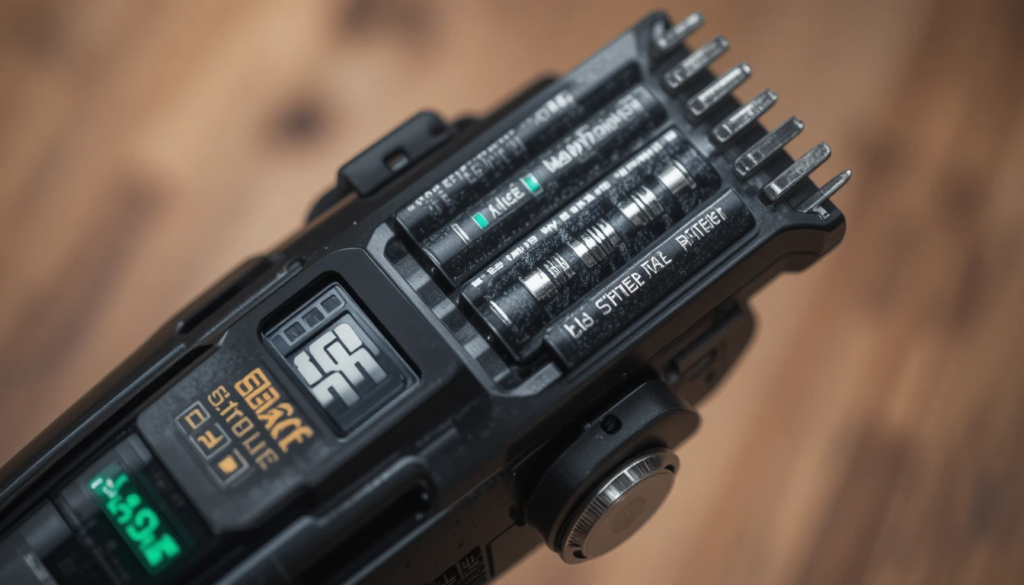
- Blade quality: stainless steel or coated steel blades stay sharp longest, and self-sharpening blades cut maintenance.
- Length control: a dial or zoom wheel with small steps gives more control than a handful of fixed combs.
- Battery: look for at least 60 minutes of runtime and a battery indicator. Being able to run while plugged in saves you if it dies mid-trim.
- Wet or dry use: waterproof models are easiest to clean and can go in the shower.
- Attachments: a detail head, nose trimmer and body guard add value only if you will actually use them.
- Ergonomics: a grippy, well-balanced handle matters more than it sounds when you are angling around your jaw and neck.
- Charging and travel: USB charging and a travel lock are handy if you are often on the road; a men’s tote bag or dopp kit keeps the trimmer, guards and charger together.
Quick buying checklist
- Decide the beard length you wear most often.
- Pick the trimmer type that matches it (dial trimmer, all-in-one, hybrid or outliner).
- Confirm the guard range covers that length in steps of 1 mm or less.
- Check runtime, charging type and whether it can run plugged in.
- Check the cost and availability of replacement blades or heads.
How to trim your beard for better results
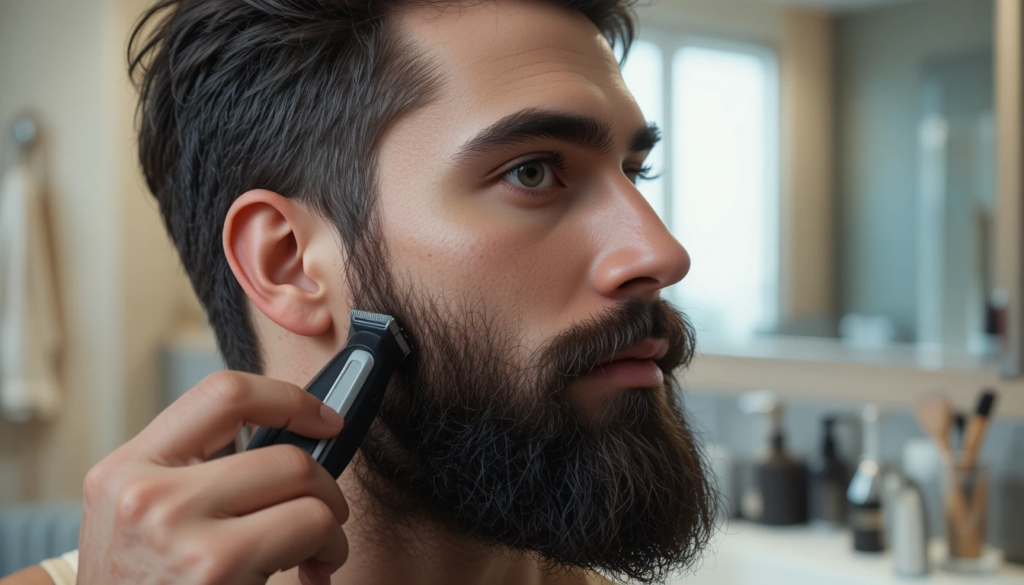
- Wash and fully dry your beard, then comb it out in the direction of growth so hairs sit naturally.
- Start with a longer guard than you think you need, then step down gradually.
- Trim the sides and cheeks first, then the chin, checking that both sides stay symmetrical.
- Set the neckline about one to two finger widths above your Adam’s apple and remove the hair below it.
- Define the cheek line with a detail head or outliner, following your natural line rather than cutting it too low.
- Clean the blades after each use and oil them if the manufacturer recommends it.
Finish with beard oil or balm to soften the hair and ease itchiness. The same idea applies on your head: the right products tame flyaways in scalp hair just as oil calms stray beard hairs.
Caring for your trimmer
Brush out clippings after every use and rinse the head if it is washable. Let it dry fully before storing. Oil non-self-sharpening blades with a drop or two of clipper oil every few sessions, run the trimmer briefly to spread it, and wipe off the excess. If the trimmer starts pulling, check for trapped hair first, then consider a replacement head. Charge lithium-ion batteries regularly rather than leaving them flat for months, which helps preserve capacity.
Common mistakes to avoid
- Trimming a wet beard with a dry-only trimmer, or cutting wet hair, which looks longer than it really is
- Jumping straight to a short guard and removing too much
- Setting the neckline too high, which makes the jaw look weaker
- Using dull blades that pull and irritate the skin
- Skipping cleaning, which clogs the blades and shortens the trimmer’s life
For more gadget and gear guides, visit our Tech category.
Frequently Asked Questions
How often should I trim my beard?
Most people trim every one to two weeks, with a quick neckline and cheek tidy every few days. Stubble needs trimming more often, usually every two to three days, to stay even.
Is a beard trimmer different from hair clippers?
Yes. Clippers have wider blades and stronger motors for cutting head hair, while beard trimmers are smaller, lighter and offer finer length control for facial hair.
Can I use a beard trimmer in the shower?
Only if the manufacturer says it is waterproof or rated for wet and dry use. Washable heads alone do not mean the whole trimmer can be used in the shower.
How long does a beard trimmer last?
A good trimmer that is cleaned regularly often lasts several years. Battery capacity usually declines first, and some models offer replaceable blades or heads to extend their life.
What is the best beard trimmer for beginners?
A mid-range trimmer with a length dial, such as the Braun BT7240, or an all-in-one like the Philips Norelco Multigroom is easy to use and forgiving while you learn.
Bottom Line on Choosing a Beard Trimmer
Match the tool to the beard you actually wear: a dial trimmer for exact short to medium lengths, an all-in-one if you also groom hair and body, a OneBlade for stubble, and an outliner if sharp lines matter. Prioritize sharp blades, fine length steps and reliable battery life over extra attachments, and keep the blades clean.