


When examining New Zealand Vs Australia, both countries emerge as prominent nations in the Southern Hemisphere, each offering unique geographical, cultural, and socio-economic characteristics. Although they share historical ties and regional proximity, their differences are quite pronounced.
Australia is significantly larger in landmass and population, known for its vast deserts, diverse ecosystems, and major metropolitan cities such as Sydney and Melbourne. In contrast, New Zealand is characterized by its compact yet breathtaking natural landscapes, including mountains, lakes, and lush greenery spread across the North and South Islands.
While Australia provides broader economic opportunities and urban experiences, New Zealand emphasizes a शांत, nature-oriented lifestyle with strong community bonds. This comparison highlights how New Zealand Vs Australia reflects a balance between scale, diversity, and lifestyle preferences.
| Aspect | New Zealand | Australia |
| Geography | Two main islands (North & South), mountainous, volcanic, lush greenery | Large continent, deserts (Outback), fertile coasts, diverse ecosystems |
| Population | ~5 million, smaller and less dense | ~25+ million, highly urbanized |
| Major Cities | Auckland, Wellington | Sydney, Melbourne, Brisbane |
| Indigenous Culture | Māori culture is strongly integrated into society | Aboriginal culture is present but less integrated into the mainstream |
| Lifestyle | nature-focused, slower pace | Urbanized, fast-paced, career-oriented |
| Tourism | Adventure tourism, scenic landscapes (Milford Sound, Queenstown) | Mix of urban & natural tourism (Opera House, Great Barrier Reef) |
| Economy | Smaller, agriculture & tourism-based | Large, diversified (mining, finance, trade) |
| Education & Healthcare | High quality, smaller scale | High-quality, globally ranked institutions |
| Climate | Temperate maritime, mild | Diverse: tropical, temperate, arid |
| Opportunities | Better work-life balance, fewer job options | More career opportunities, higher salaries |
New Zealand Vs Australia
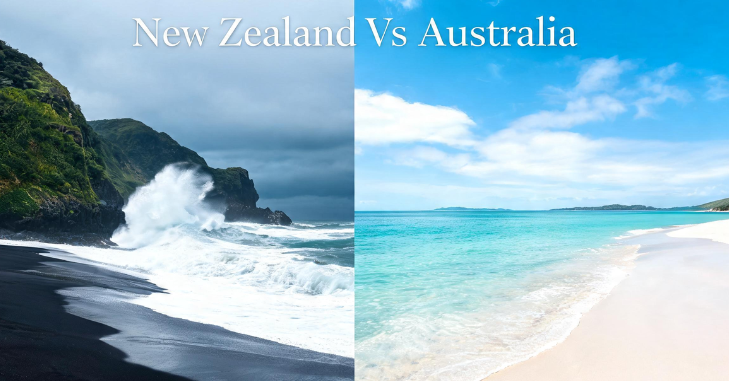
When comparing New Zealand Vs Australia, both countries stand out as unique yet closely connected nations in the Southern Hemisphere, each offering distinct geographical, cultural, and lifestyle experiences.
Australia, being significantly larger, is known for its vast deserts, diverse ecosystems, and major metropolitan cities such as Sydney and Melbourne, whereas New Zealand is characterized by its breathtaking natural landscapes, including mountains, lakes, and lush greenery across its North and South Islands.
In terms of population, Australia has a much larger and more urbanized population, while New Zealand maintains a smaller, more close-knit society with a strong emphasis on community. Culturally, both nations share British colonial influences. Still, New Zealand strongly preserves and integrates Māori traditions into its national identity, unlike Australia, where Indigenous cultures, though significant, are less visibly integrated into mainstream life.
Geographical Features
Geographical Features of New Zealand
The geography of New Zealand reflects striking natural diversity despite its relatively small size. The country comprises two main islands, the North Island and the South Island, characterized by mountainous terrain, active volcanic zones, and lush greenery.
The Southern Alps dominate the South Island, creating dramatic landscapes that include glaciers, alpine lakes, and rugged peaks. Additionally, geothermal regions such as Rotorua highlight New Zealand’s volcanic origins, with hot springs and geysers adding to its unique environmental profile. Overall, New Zealand’s geography is compact yet highly varied, with significant landscape changes over short distances.
Geographical Features of Australia
Australia, in contrast, is the world’s smallest continent but a vast country with highly diverse ecosystems. Much of its interior, commonly known as the Outback, is arid or semi-arid, featuring deserts and sparse vegetation. Iconic natural landmarks such as Uluru exemplify its desert geography.
However, the coastal regions are more fertile, supporting dense populations and major cities. Australia is also home to the Great Barrier Reef, the world’s largest coral reef system, a major ecological and tourism asset. This vast landmass results in wide climatic and ecological variation across the country.
Comparative Overview
While New Zealand’s geography is compact and varied within short distances, Australia’s expansive landmass results in diversity on a much larger scale. New Zealand emphasizes mountainous and green landscapes shaped by volcanic activity, whereas Australia showcases a mix of arid deserts, fertile coastlines, and globally significant natural features.
Population and Demographics

- New Zealand has a relatively small population of approximately 5 million people, with a large proportion living in urban areas such as Auckland.
- The population of New Zealand includes the indigenous Māori community, which plays a central role in shaping the country’s cultural identity and public policies.
- Australia, in contrast, has a much larger population exceeding 25 million people, making it significantly more populous than New Zealand.
- Major Australian cities like Sydney and Melbourne are densely populated and act as key economic and cultural centers.
- Australia is considered one of the most multicultural countries in the world, with a substantial immigrant population contributing to its diversity.
- Both New Zealand and Australia have high life expectancy rates and maintain a strong overall quality of life.
- Australia’s larger population creates more complex urban planning and infrastructure challenges, particularly in major cities.
- New Zealand, on the other hand, has a more evenly distributed population, resulting in less urban congestion and a comparatively relaxed living environment.
Culture and Lifestyle
Culturally, both nations share British colonial influences but have developed distinct identities. In New Zealand, Māori culture is deeply integrated into national life, influencing language, traditions, and governance. The haka, a traditional Māori war dance, is internationally recognized and performed during national events.
Australia’s culture is shaped by its multicultural population, blending indigenous Aboriginal heritage with influences from Europe, Asia, and beyond. The lifestyle is often associated with outdoor activities, beach culture, and sports such as cricket and rugby.
Lifestyle differences are also notable. New Zealand offers a slower-paced, nature-oriented way of life, with easy access to outdoor activities such as hiking and skiing. Australia, while also outdoor-focused, has a more urbanized lifestyle with vibrant city life, entertainment, and career opportunities.
Tourism and Attractions
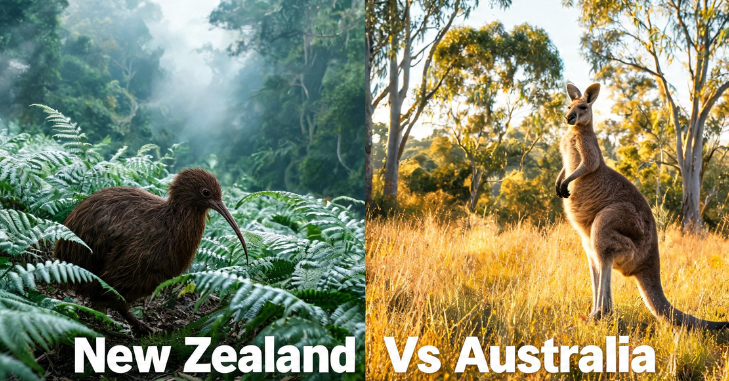
- Tourism plays a significant role in the economies of both New Zealand and Australia, contributing greatly to their national income.
- New Zealand is widely known for its natural beauty and adventure tourism, attracting visitors who seek scenic landscapes and outdoor activities.
- Popular destinations in New Zealand, such as Milford Sound and Queenstown, are famous for offering experiences like bungee jumping, skydiving, and nature exploration.
- Australia, in contrast, offers a blend of natural and urban tourism experiences, appealing to a broader range of visitors.
- Iconic attractions like the Sydney Opera House highlight Australia’s architectural and cultural appeal.
- Scenic routes such as the Great Ocean Road offer breathtaking coastal views and are major tourist attractions.
- Wildlife tourism in Australia is also highly popular, offering opportunities to see animals such as kangaroos and koalas in their natural habitats.
- New Zealand mainly attracts travelers who prefer tranquility, nature immersion, and adventure-based activities.
- Australia caters to a broader tourism market, including those interested in city life, beaches, wildlife, and diverse ecosystems.
Economy and Opportunities
Although not always the primary focus of comparison, economic structures differ between the two countries. Australia has a larger and more diversified economy, driven by mining, finance, and international trade. Its GDP is significantly higher, providing more employment opportunities across industries.
New Zealand’s economy is smaller but stable, relying heavily on agriculture, tourism, and dairy exports. The work-life balance in New Zealand is often considered superior, though salaries may be lower compared to Australia.
Education and Healthcare
Both countries boast high-quality education and healthcare systems. Universities in Australia rank among the top globally and attract international students. New Zealand also offers excellent education, but on a smaller scale. Healthcare systems in both nations are publicly funded, with private options available. Accessibility and quality are generally high, though Australia’s larger system allows for more specialized services.
Climate and Environment

New Zealand has a temperate maritime climate with moderate rainfall and mild temperatures. Green landscapes and clean air characterize its environment. Australia’s climate varies widely, from tropical in the north to temperate in the south and arid in the interior. This diversity can lead to extreme weather conditions such as droughts and bushfires.
Conclusion
In conclusion, while New Zealand and Australia share historical ties and regional proximity, they offer distinctly different experiences. New Zealand stands out for its compact geography, strong indigenous cultural integration, and tranquil lifestyle. Australia, with its vast landmass, larger population, and economic strength, provides greater diversity in opportunities and experiences.
Ultimately, the choice between the two depends on individual preferences whether one values the serene, nature-focused environment of New Zealand or the dynamic, multicultural, and economically robust setting of Australia.
Want to know about Best Time To Visit Oregon: All You Need To Know About Ideal Season, Spring Season (March to May), Best Time for Budget Travel, And Much More Check out our Travel category.
FAQs
Whether Australia or New Zealand is better depends entirely on your personal priorities; choose Australia if you want higher salaries, bustling cosmopolitan cities, and diverse climates, or pick New Zealand if you prioritize a slower pace of life, dramatic nature, and a tighter-knit community.
Australia is significantly richer than New Zealand. It boasts a much larger overall economy and higher average wealth. When comparing the two, Australia’s GDP and wealth per capita outpace New Zealand’s by roughly $20,000 to $30,000 (USD), which results in higher average wages across the Tasman.
Australia is a massive, generally flat and dry continent known for its vast deserts, Outback, and diverse wildlife. In contrast, New Zealand is a much smaller, mountainous, and lush island nation famous for its dramatic glacial landscapes, fjords, and outdoor adventure culture.
New Zealand is generally considered easier to get Permanent Residency (PR) than Australia. While both countries use highly competitive, point-based systems, New Zealand’s smaller job market and targeted pathways often make it easier to enter and transition to residency than in Australia’s broader, more competitive applicant pool.