

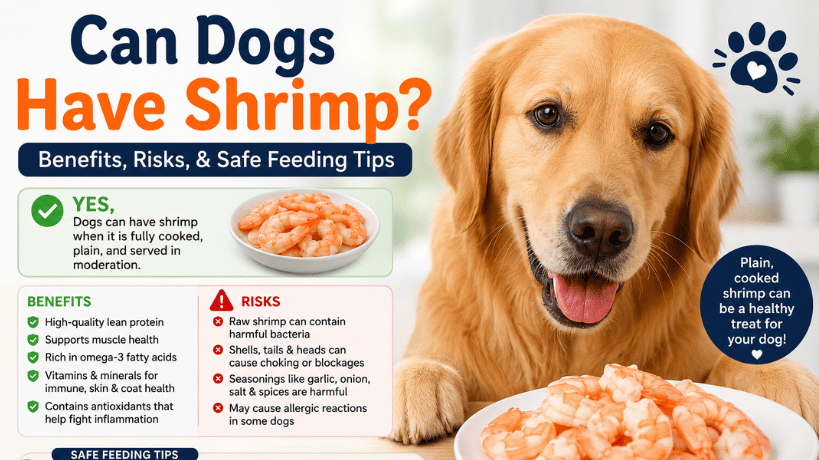
Many pet owners enjoy sharing small bites of their favorite foods with their dogs, but not every human food is safe for canine companions. Seafood, including shrimp, often raises questions because while it is packed with nutrients, it can also pose health risks if handled or prepared incorrectly.
So, can dogs have shrimp? The answer is yes—but only when it is fully cooked, properly prepared, and offered in moderation. Shrimp is a lean source of protein that contains important vitamins, minerals, omega-3 fatty acids, and antioxidants that may support your dog’s overall health.
However, raw shrimp, shells, tails, and heavily seasoned preparations can cause digestive problems, choking hazards, or even expose dogs to harmful bacteria. Knowing how to prepare shrimp safely and understanding the appropriate serving size can help you avoid unnecessary risks.
| Section | Summary |
| Short Answer | Yes. Dogs can eat shrimp if it is fully cooked, peeled, deveined, unseasoned, and served in moderation. |
| Main Benefits | Lean protein, omega-3 fatty acids, vitamin B12, selenium, phosphorus, |
| Potential Risks | Raw shrimp may contain harmful bacteria, and shells and tails can cause choking or blockages. |
| Safe Preparation | Cook thoroughly; remove shell, tail, head, and vein; serve plain; cut into small |
| Feeding Frequency | Offer only as an occasional treat—not as a replacement for a complete and balanced dog diet. |
| Safe Seafood Alternatives | Cooked salmon, sardines (in water, no salt), cod, pollock, tilapia, and limited amounts of tuna. |
| If Your Dog Eats Raw or Seasoned Shrimp | Monitor for vomiting, diarrhea, choking, lethargy, or allergic reactions. |
| Safety Tips | Introduce gradually, feed small portions, monitor for allergies, and always serve plain cooked shrimp. |
Can Dogs Have Shrimp?
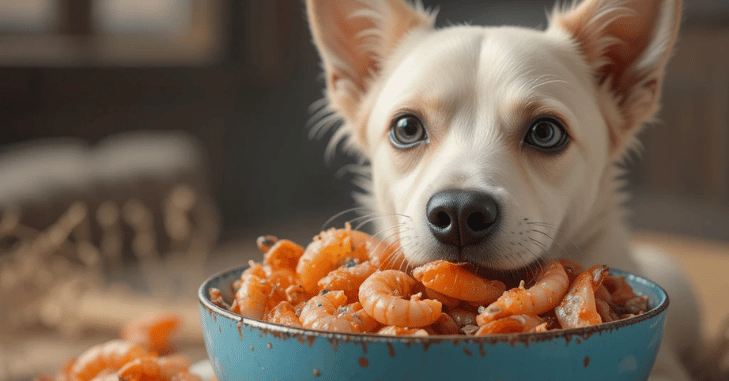
Can dogs have shrimp? As long as they are fully cooked, peeled, deveined, and served plain? Cooked shrimp is a healthy source of lean protein, vitamins, minerals, and antioxidants that can support your dog’s overall health when fed in moderation.
However, shrimp should only be offered as an occasional treat and should never replace a complete and balanced dog diet. Avoid feeding dogs raw shrimp, shrimp shells, tails, or shrimp prepared with butter, garlic, onion, salt, or spicy seasonings, as these can cause digestive problems or even be harmful.
Is Shrimp Good for Dogs?
Yes, shrimp can be good for dogs when served in moderation and prepared properly. It is a low-fat, high-protein seafood that provides essential nutrients such as vitamin B12, selenium, phosphorus, iodine, niacin, and omega-3 fatty acids.
These nutrients help support healthy muscles, a strong immune system, proper metabolism, and healthy skin and a shiny coat. Shrimp also contains the antioxidant astaxanthin, which may help reduce inflammation and protect cells from oxidative damage.
Risks of Feeding Shrimp to Dogs
Raw Shrimp Can Contain Harmful Bacteria
Raw shrimp may carry harmful bacteria and parasites, including Salmonella, Vibrio, and Listeria, which can cause foodborne illnesses in both dogs and humans.
Shrimp Shells Can Cause Choking
Shrimp shells, tails, heads, and legs are hard, sharp, and difficult for dogs to digest. These parts can become lodged in the throat, creating a choking hazard, or they may cause mouth injuries, stomach irritation, or intestinal blockages that require veterinary treatment.
Seasonings Can Be Dangerous
While plain cooked shrimp is generally safe, shrimp prepared for human meals often contains ingredients that are harmful to dogs. Garlic and onions are toxic to dogs, while butter, excessive salt, spicy seasonings, Cajun spices, chili powder, lemon pepper, and hot sauces can upset the digestive system or lead to more serious health issues.
Allergic Reactions
Some dogs may have an allergy or sensitivity to shellfish, including shrimp. If your dog is eating shrimp for the first time, start with a very small amount and monitor them closely for signs of an allergic reaction. Symptoms may include itching, skin redness, and swelling of the face or paws.
Health Benefits of Shrimp for Dogs

When fed occasionally and prepared correctly, shrimp can provide several health benefits for dogs. It is an excellent source of lean protein that helps build and maintain strong muscles while supporting tissue repair and overall growth.
Shrimp also contains important vitamins and minerals, including vitamin B12, selenium, phosphorus, iodine, and niacin, which contribute to healthy nerve function, energy production, strong bones, and a well-functioning immune system.
Excellent Source of Lean Protein
Protein helps dogs maintain:
- Strong muscles
- Healthy skin
- Organ function
- Immune system health
Shrimp provides high-quality protein while being lower in fat than many other animal proteins.
Rich in Antioxidants

Shrimp naturally contain antioxidants like astaxanthin.
These compounds may help:
- Reduce inflammation
- Support healthy aging
- Protect cells from damage
- Improve immune function
Good for Active Dogs
Shrimp can be an excellent occasional treat for active, energetic dogs because it is rich in high-quality protein and naturally low in calories and fat. Protein plays a vital role in building and repairing muscles, supporting recovery after exercise, and maintaining overall strength and endurance.
This makes shrimp a good option for dogs that enjoy regular physical activity, hiking, agility training, or outdoor play. While it can provide an extra nutritional boost, shrimp should still be served in moderation as part of a complete, balanced diet to ensure your dog receives all the essential nutrients for long-term health.
Safe Seafood Alternatives for Dogs
If your dog enjoys seafood, these cooked options are generally safer:
- Salmon (fully cooked, boneless)
- Sardines packed in water with no added salt
- White fish such as cod or pollock
- Tilapia
- Tuna in very small amounts and only occasionally due to its mercury content.
What Should You Do If Your Dog Eats Raw or Seasoned Shrimp?
If your dog accidentally eats raw or heavily seasoned shrimp, stay calm and monitor them closely for any signs of illness. Raw shrimp may contain harmful bacteria or parasites that can cause vomiting, diarrhea, stomach pain, or loss of appetite. In contrast, seasoned shrimp may contain ingredients such as garlic, onion, excessive salt, butter, or spicy seasonings that can be harmful to dogs.
Offer your dog fresh drinking water and watch for symptoms over the next 24 hours. If your dog develops persistent vomiting, severe diarrhea, difficulty breathing, extreme lethargy, or abdominal pain or shows signs of choking, contact your veterinarian immediately.
Tips for Feeding Shrimp Safely

- Cook shrimp thoroughly before serving.
- Remove the shell, tail, head, and vein.
- Avoid butter, garlic, onion, salt, and spices.
- Cut shrimp into small pieces.
- Introduce it gradually.
- Feed only in moderation.
- Watch for signs of allergies or digestive upset.
- Use shrimp as an occasional treat, not a meal replacement.
Conclusion
Can Dogs Have Shrimp? Shrimp can be a healthy and delicious occasional treat for dogs when it is fully cooked, peeled, deveined, and served plain without any seasonings or sauces. Its high-quality protein, essential vitamins, minerals, and antioxidants can provide several nutritional benefits, including supporting muscle health and immune function.
However, shrimp should never replace a complete and balanced dog diet, and it should always be fed in moderation. To keep your dog safe, avoid giving raw shrimp, shrimp shells, or tails, and avoid cooked shrimp prepared with ingredients like garlic, onion, butter, excessive salt, or spicy seasonings.
Want to know about Can Dogs Eat Oranges? Benefits, Risks, Serving Tips, and What Every Pet Owner Should Know Check out our Pets category.
FAQs
Yes. Plain, fully cooked shrimp without shells, tails, or seasonings is generally safe for dogs and can be offered occasionally as a healthy treat.
Raw shrimp may contain harmful bacteria and parasites that can cause foodborne illness in dogs.
Shrimp should only be given as an occasional treat and should not replace a complete and balanced dog diet.
Shrimp shells can cause choking, digestive irritation, or intestinal blockage. Contact your veterinarian if your dog shows signs of discomfort, vomiting, or difficulty passing stool.
Yes. Shrimp tails are hard and sharp, making them a choking hazard and difficult to digest. Always remove the tail before feeding shrimp to your dog.
Some dogs are allergic to shellfish. If your dog has never eaten shrimp before, introduce a very small amount and monitor closely for signs of an allergic reaction.