

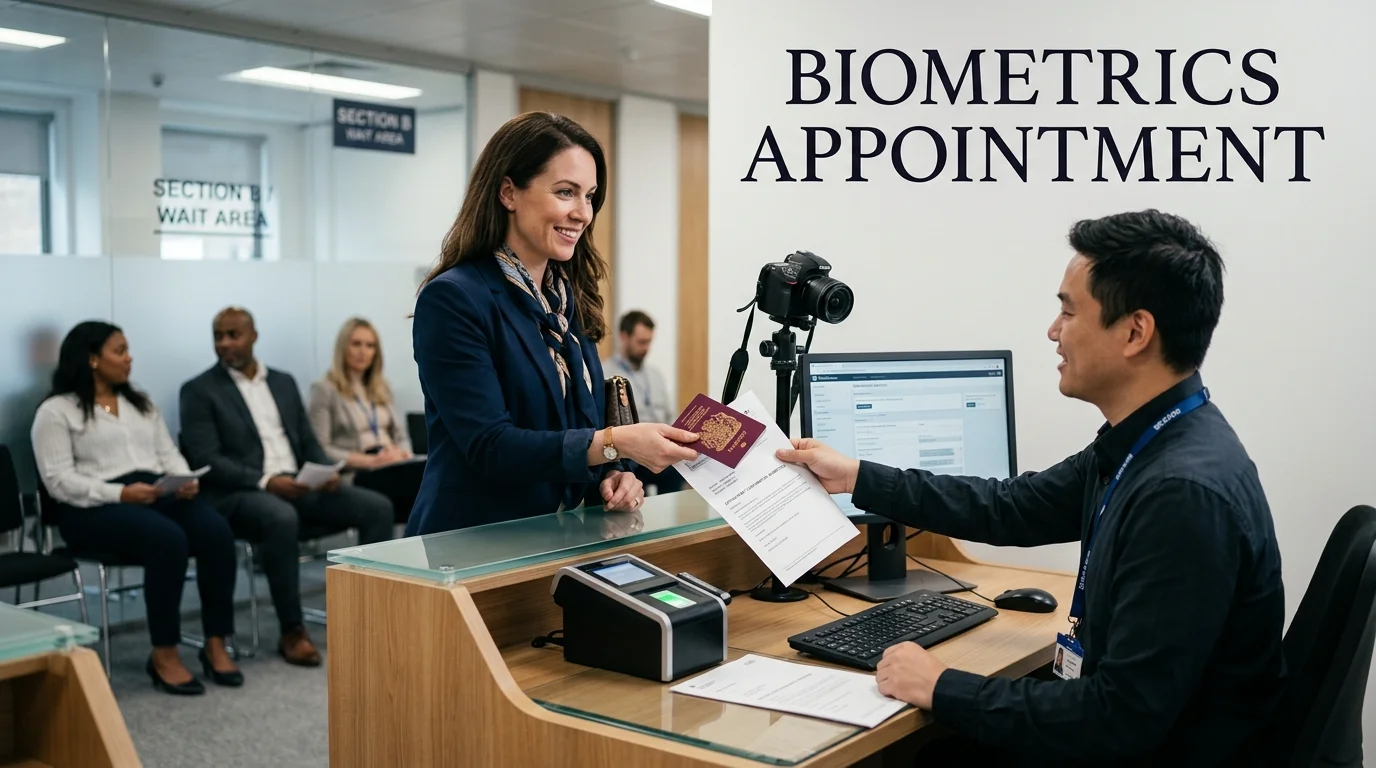
A biometrics appointment is a short, in-person visit during which an immigration or visa authority confirms your identity by collecting fingerprints, a photograph, and sometimes a signature. Bring your appointment notice and the identity documents listed in your instructions. The visit is usually straightforward, but the exact requirements depend on the agency handling your case. Our related guide, Nolle Prosequi, goes further into this.
If you received an appointment notice, read it carefully before relying on general advice. USCIS, Immigration, Refugees and Citizenship Canada (IRCC), and UK visa services follow different procedures.
| At a glance | What to know |
| Main purpose | Confirm your identity and collect biometric information |
| Commonly collected | Fingerprints and a photograph; a signature may also be required |
| What to bring | Your appointment notice or instruction letter and the required identity document |
| How long to allow | The collection process is usually brief, but security and check-in can add time |
| Does it mean approval? | No. Completing biometric collection is one step in the application process |
| If you cannot attend | Follow the rescheduling instructions provided by the agency handling your application |
What Happens at a Biometrics Appointment?
The process usually starts with identity and document checks. Staff then collect the biometric information required for your application.
For a U.S. immigration case, a USCIS Application Support Center may collect fingerprints, a photograph, and a signature when required. USCIS instructs applicants to bring their appointment notice and a valid, unexpired photo ID.
For a Canadian application, IRCC commonly requires fingerprints and a photograph. Applicants who receive a biometric instruction letter must bring that letter and a valid passport to the designated collection location.
UK applicants may provide fingerprints and a photograph at a visa application centre or another designated service point. The exact procedure depends on the application route and whether an in-person visit is required.
These appointments are mainly for identity collection. They are not normally detailed interviews about the merits of your immigration case.
What to Bring and How to Prepare
Your own notice is the most important checklist because document requirements vary by country and case type.
| System | Common documents to bring | Key point |
| U.S. USCIS | Appointment notice and a valid, unexpired photo ID | Follow the location and time shown on your notice |
| Canada IRCC | Biometric instruction letter and a valid passport | Use an official collection location |
| UK visa services | Passport and any documents required by your booking instructions | Requirements can differ by application route |
USCIS instructs applicants to bring the biometric services notice and acceptable photo identification. Canada requires applicants to bring their biometric instruction letter and a valid passport when attending an appointment after receiving that letter.
Before leaving home:
- Check that the name on your notice matches the name on your identity documents.
- Re-read the address, date, arrival instructions, and identification requirements.
- Bring only the people who need to attend unless your instructions allow a companion.
- Check security rules before bringing large bags, sharp objects, or other restricted items.
- Keep your appointment confirmation or instruction letter easily accessible.
USCIS offices may have limited space, so applicants are generally advised to bring only those people whose presence is necessary.
If your case involves asylum or humanitarian protection, WordSpira’s overview of working with an asylum lawyer may help you understand the broader legal process surrounding an application.
How Long Should You Allow for the Visit?
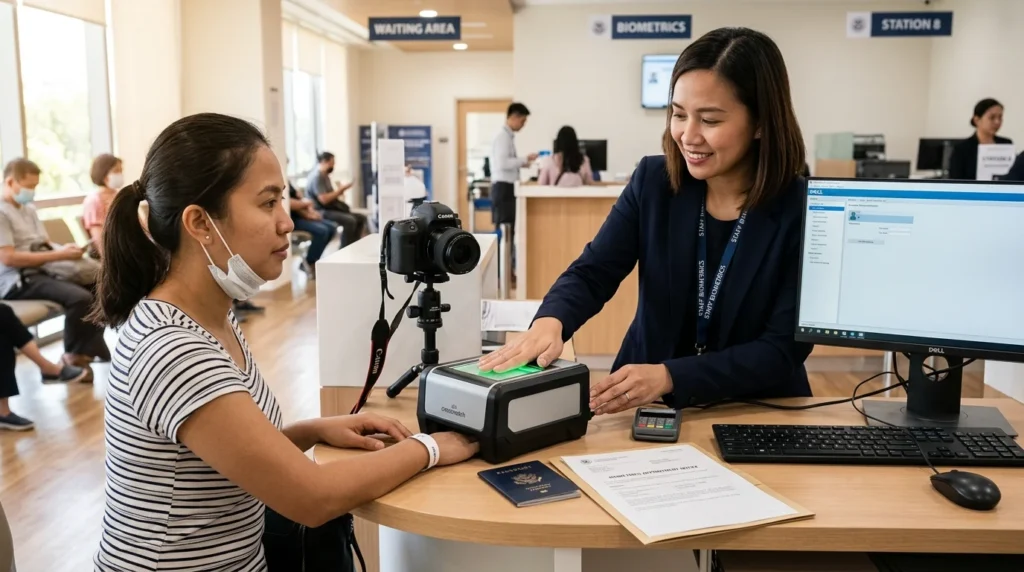
There is no single official duration that applies to every country, visa centre, or immigration office. Fingerprint and photo collection is usually a brief procedure. Still, your total visit may include security screening, check-in, document review, waiting, and the collection process itself. Office traffic can also affect how long you spend there.
Allow enough time so that a short delay does not create another problem. Avoid scheduling a tightly timed work meeting, train journey, or flight immediately after the visit.
Your appointment notice may include an arrival time or instructions about how early you should arrive. Follow those directions rather than relying on a general estimate found online.
Rescheduling or Missing the Appointment
If you need to reschedule your biometrics appointment, take action before the scheduled time whenever possible. For USCIS cases, applicants who need a new date should request rescheduling before the original appointment date and time. They may also need to provide a valid reason for the request.
Canada handles timing differently. IRCC generally gives applicants a set period after the date of the biometric instruction letter to provide the required information. If you cannot meet the deadline, follow IRCC’s instructions and explain the reason for the delay.
UK rescheduling procedures depend on the service provider and booking system used for your application. Follow the instructions in your booking confirmation rather than assuming that another country’s rules apply.
Missing an appointment without taking the required action can delay your case. In some systems, failing to comply may also affect how your application is processed. Contact the responsible agency promptly if you have already missed your appointment.
What Happens After Your Fingerprints and Photo Are Taken?
Completing biometric collection does not mean that your visa, green card, residence application, or other immigration benefit has been approved. The responsible authority may use the information to confirm your identity and conduct checks related to your application.
Your next step depends on the type of case. An agency may continue background checks, review supporting evidence, request more information, schedule another interview, or make a decision.
For some applicants, previously submitted biometric information may remain valid for a certain period. Eligibility and reuse rules depend on the type of application, so you should check your current case requirements rather than assume that a new collection is necessary.
For broader explanations of legal and immigration-related subjects, you can also browse WordSpira’s Law section.
U.S., Canadian, and UK Rules Are Not Interchangeable
One of the easiest mistakes to make is following advice for the wrong immigration system.
| Issue | U.S. USCIS | Canada IRCC | UK visa services |
| Common collection | Fingerprints, a photograph, and sometimes a signature | Fingerprints and a photograph | Fingerprints and a photograph |
| Main notice | USCIS appointment notice | Biometric instruction letter | Booking or application instructions |
| Common identity document | A valid, unexpired photo ID | A valid passport | A passport, as instructed |
| Timing issue | Reschedule before the original date and provide a valid reason if required | Complete the process within the period stated in your instructions | Follow the rules of the relevant booking provider |
| Approval guaranteed? | No | No | No |
The practical lesson is simple: first identify which authority issued your notice. Then follow that authority’s current instructions for documents, deadlines, and rescheduling.
Your Next Step
Open the notice you received and confirm three details: the issuing authority, the required identity document, and the deadline or appointment time. Then compare those instructions with the latest official guidance from the agency responsible for your case before you travel. Rules can change, and advice written for another country may not apply to your situation.
You can also return to WordSpira for more plain-language guides on legal and practical topics.
Frequently Asked Questions
There is no universal appointment length. Fingerprint and photo collection is usually brief, but check-in, security screening, document checks, and waiting can extend your visit. Follow any timing instructions printed on your notice.
No. Identity collection is only one stage of the process. The agency may still need to complete security checks, review evidence, conduct an interview, or take other steps before reaching a decision.
That depends on the office and your circumstances. Some offices have limited space and may ask applicants to bring only people whose presence is necessary. Different rules may apply to people who need disability assistance or other permitted support. Check your notice before bringing a companion.
Follow the staff member’s instructions at the collection site. Do not assume that difficulty capturing your fingerprints means your application has failed. The responsible agency will tell you if another action or appointment is necessary.
Age requirements vary between immigration systems. Some authorities exempt young children from fingerprint collection while still requiring a photograph. Check the rules that apply to the child’s specific application.
Payment rules depend on the application system. In some cases, applicants pay the required biometric fee as part of the application process before receiving instructions to attend an appointment. The application fee and the appointment-booking process should not be confused with each other.