


Adverse possession Texas can allow someone to gain title to land after meeting strict legal requirements. Simply using another person’s property for several years does not automatically create ownership. Texas law requires possession that is visible, continuous, hostile to another claim, and supported by the applicable limitations statute.
Texas has several limitations periods rather than one universal deadline. Depending on the circumstances, a claim may have a three-, five-, ten-, or 25-year period. Property owners and claimants should identify the applicable statute before assuming enough time has passed.
Direct answer: Texas adverse-possession law can transfer title when someone visibly and continuously possesses property under a hostile claim of right for the required period. The applicable period may be 3, 5, 10, or 25 years. Different periods require different evidence, including deeds, tax payments, use, or cultivation.
Texas Adverse Possession at a Glance
| Issue | General Texas Rule |
|---|---|
| Basic legal concept | Actual and visible possession under a hostile claim of right |
| Common limitations periods | 3, 5, 10, or 25 years |
| Three-year route | Generally requires title or color of title |
| Five-year route | Requires qualifying use, applicable tax payments, and a duly registered deed |
| Ten-year route | Requires peaceable adverse possession while cultivating, using, or enjoying the property |
| 25-year route | Can apply after extended peaceable adverse possession |
| Public-use property | Cannot be acquired through adverse possession |
| Automatic ownership? | No; whether title has accrued depends on satisfying the statute and evidence |
The details matter because each limitations period has different requirements. A claimant cannot select the shortest period simply because three years have passed. The facts must satisfy the specific statute supporting that limitations period.
What Does Adverse Possession Mean Texas?
Texas law defines adverse possession as an actual and visible appropriation of real property. The possession must continue under a claim of right inconsistent with another person’s claim. Texas law also defines peaceable possession as continuous possession uninterrupted by an adverse lawsuit seeking recovery.
These definitions make visible conduct central to a claim. A private belief that land belongs to someone does not establish ownership on its own. The Texas Supreme Court has emphasized that mistaken beliefs about ownership do not transfer title without acts showing possession.
The word “hostile” can also cause confusion. It does not mean the parties must argue, threaten each other, or have a personal dispute. It generally concerns whether the possessor claims the property in a manner inconsistent with another person’s ownership rights.
Adverse Possession Texas Time Limits Explained
Texas provides several limitations periods under Chapter 16 of the Civil Practice and Remedies Code. The correct period depends on deeds, tax payments, possession, land use, and other circumstances. A longer period does not necessarily have the same requirements as a shorter one.
Three-Year Limitations Period
Section 16.024 addresses a three-year limitations period. It applies when another person holds real property in peaceable adverse possession under title or color of title. Those concepts have specific statutory meanings, so ordinary occupancy is not enough.
This route is narrower than many people assume. Someone who enters vacant land without qualifying title documentation generally cannot rely on this period. The documents and chain of transfers require careful examination.
Five-Year Limitations Period
The five-year statute contains several express requirements. The possessor must cultivate, use, or enjoy the property and pay applicable property taxes. The person must also claim the property under a duly registered deed.
Texas law excludes certain documents from this route. A claim based on a quitclaim deed does not qualify under Section 16.025. Forged deeds and deeds executed under forged powers of attorney are also excluded.
Paying taxes alone therefore does not create ownership. Likewise, possessing property for five years without the qualifying registered deed does not satisfy this specific statute. All required conditions must work together.
Ten-Year Limitations Period
The ten-year provision is often important when no qualifying deed supports a shorter limitations period. Section 16.026 covers peaceable adverse possession by someone who cultivates, uses, or enjoys the property. The character of that use remains important when determining whether possession is genuinely adverse.
Without a title instrument, this provision generally limits possession to 160 acres, including improvements. An exception can apply when the acreage actually enclosed exceeds 160 acres. A registered instrument fixing boundaries can also affect the extent of the claimed property.
A fence can provide useful evidence, but a fence does not guarantee a successful claim. Texas courts examine how the land was enclosed and used. Incidental fencing or occasional grazing may fail to show the required visible appropriation.
Twenty-Five-Year Limitations Periods
Texas law also contains 25-year limitations provisions. Section 16.027 applies despite certain legal disabilities affecting the person entitled to recover the property. It concerns land held in peaceable adverse possession by someone cultivating, using, or enjoying it.
Section 16.028 addresses another 25-year situation involving a recorded deed or other qualifying instrument. That provision includes specific requirements beyond the passage of time. Anyone relying on this section should review the exact statutory language with qualified counsel.
What Must a Claimant Usually Prove?
The evidence must show more than long-term presence on the land. Texas courts look for conduct demonstrating an actual claim to the property. The possession must be sufficiently visible to communicate that claim through outward actions.
Common evidence may include the following.
- Maintaining or constructing meaningful boundary fencing.
- Building or maintaining improvements.
- Cultivating or consistently using the land.
- Excluding others from the disputed property.
- Documents describing the claimed boundaries.
- Property-tax records when the applicable statute requires them.
- Photographs showing historical use.
- Surveys identifying the disputed area.
- Witness testimony concerning continuous possession.
- Recorded instruments supporting a claimed interest.
No single item guarantees success in every dispute. Evidence must connect the claimant’s conduct with the land being claimed. The required proof also changes with the statutory limitations period.
Does Paying Property Taxes Give You Ownership?
Paying another property’s taxes does not automatically make someone its owner. Tax payment is an express element of the five-year statute, but other conditions also apply. The claimant must meet the remaining requirements of Section 16.025.
Tax records can still become important evidence in other disputes. They may help document how someone treated the property during a particular period. They should not be mistaken for a substitute for every adverse-possession requirement.
Is a Fence Enough to Claim Someone Else’s Land?
A fence can support a claim because it may provide visible evidence of possession. Yet Texas courts examine the fence’s purpose, location, history, and surrounding use. An incidental enclosure may carry far less weight than a boundary deliberately maintained as part of exclusive possession.
This distinction often matters in rural property disputes. Land may sit inside a larger pasture without being clearly claimed against its record owner. Texas case law shows that casual enclosure and occasional grazing may be insufficient in some circumstances.
Can a Neighbor Claim Land Because a Fence Is in the Wrong Place?
A misplaced fence can create a boundary dispute, but the fence does not instantly change legal ownership. The claimant still needs evidence satisfying the applicable limitations statute. The duration and nature of possession remain central questions.
For example, imagine a fence sits six feet beyond the surveyed boundary for many years. The neighbor also maintains that strip and treats it as part of the yard. Those facts may matter, but the complete history and applicable limitations period must still be examined.
The Texas Supreme Court has also rejected the idea that mistaken ownership beliefs alone establish adverse possession. Visible appropriation must accompany the claimed ownership. This makes physical conduct and historical evidence especially important in fence-line disputes.
Does the Property Owner Have to Know?
Direct admission by the record owner is not necessarily required. Instead, the claimant’s conduct must be sufficiently actual and visible to support the required hostile claim. Hidden or ambiguous activity is much harder to reconcile with that requirement.
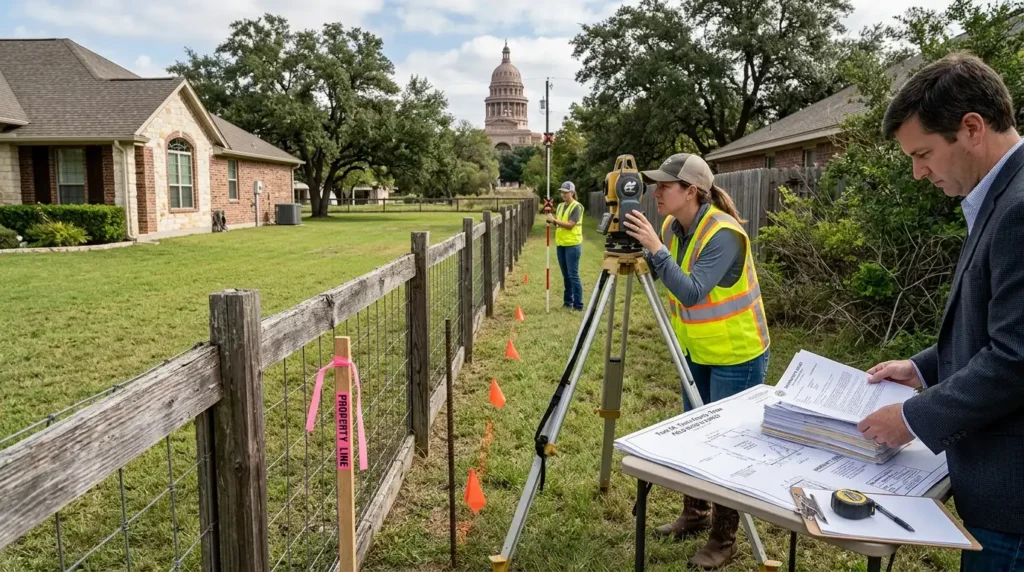
Owners should therefore monitor boundaries rather than rely only on recorded deeds. Periodic surveys, photographs, and inspections can reveal encroachments before years pass. Written records also help establish when an issue first appeared.
What Can Interrupt an Adverse-Possession Period?
Texas defines peaceable possession as possession that is continuous and not interrupted by an adverse suit to recover the property. Litigation can therefore have major consequences for the limitations analysis. Review the timing and nature of any lawsuit carefully.
Other events may affect whether possession remained continuous or genuinely hostile. Permission from the owner can become especially important because permissive use differs from a hostile claim to ownership. Changes between successive possessors may also require examining Texas rules concerning tacking and privity.
Can Successive Owners Combine Their Years of Possession?
Texas law permits what is commonly called “tacking” in qualifying circumstances. Peaceable adverse possession does not always need to remain with one individual throughout the entire limitations period. Section 16.023 requires privity of estate between each holder and successor.
That rule prevents unrelated periods of occupation from automatically being combined. Documentation showing transfers between successive possessors can become important. Review the exact chain before combining different periods.
What About Adverse Possession Between Heirs?
Texas has a separate provision for certain cotenant heirs. Section 16.0265 addresses circumstances where heirs acquire identical undivided interests through intestate succession. Its requirements differ substantially from an ordinary ten-year claim.
The provision includes requirements involving exclusive possession, use, property taxes, affidavits, notice, and other procedures. A cotenant should not assume exclusive occupancy automatically eliminates another heir’s ownership. These cases deserve specific legal review because ordinary possession rules may not resolve the issue.
Can Government or Public Property Be Adversely Possessed?
Texas law places an important restriction on property dedicated to public use. Section 16.030 states that a person cannot acquire title through adverse possession to real property dedicated to public use. That rule can defeat a claim regardless of how long someone occupied the land.
Government-related land questions can also involve statutes outside the standard private-property rules. Identify the property’s legal status early. Claimants should not assume the normal private-land limitation periods apply.
How Property Owners Can Protect Their Rights
Owners who discover an encroachment should document the situation promptly. Photographs, surveys, deeds, tax records, correspondence, and historical information can help establish what happened. Waiting without understanding the legal consequences may make the dispute harder to resolve.
Owners can consider several practical steps:
- Confirm the recorded legal description.
- Obtain a current boundary survey when necessary.
- Photograph fences, buildings, roads, and other encroachments.
- Preserve communications concerning permission or disputed ownership.
- Review property-tax and deed records.
- Determine when the other person’s possession began.
- Consult a Texas real-estate attorney before signing agreements.
- Consider timely legal action when ownership is disputed.
Giving permission can affect the hostile nature of another person’s use, but informal arrangements create evidentiary problems. Written agreements usually provide clearer records than verbal understandings. An attorney can help choose the right approach for the specific property.
What Claimants Should Document
Someone asserting ownership should build a factual timeline before making legal conclusions. Record when possession started, what physical actions occurred, and whether anyone challenged possession. Keep copies of deeds, surveys, photographs, tax receipts, and relevant correspondence.
The claimed boundaries also need careful attention. A person may have strong evidence of using one section but little evidence concerning another. The legal claim should match the property that was visibly possessed under the applicable statute.
How Is Title Formally Resolved?
Satisfying a statutory period and obtaining clean record title are related but different practical issues. Section 16.030 states that full title results when recovery is barred under the applicable limitations provisions. A dispute may still require judicial action to establish ownership in the public record.
Texas property litigation can involve a trespass-to-try-title action or other appropriate proceedings. The proper claim depends on the facts and requested relief. A successful claimant may need a judgment or other recordable documentation before a title company treats ownership as established.
Frequently Asked Questions About Adverse Possession in Texas
How many years does adverse possession take in Texas?
There is no single period for every case. Texas law contains three-, five-, ten-, and 25-year limitations provisions with different requirements. The correct period depends on facts such as deeds, taxes, possession, use, and legal disabilities.
Can you claim property after maintaining it for ten years?
Maintenance can provide evidence, but ten years of maintenance does not automatically establish title. The ten-year statute requires peaceable adverse possession involving cultivation, use, or enjoyment. The broader statutory definition also requires actual and visible appropriation under a hostile claim of right.
Do you have to pay property taxes for adverse possession?
Not under every Texas limitations provision. Section 16.025 expressly requires paying applicable taxes for the five-year route. Other statutory periods contain different conditions.
Can a tenant adversely possess a landlord’s property?
Ordinary tenancy begins with the owner’s permission, which conflicts with a hostile claim. A later claim may involve different facts if the occupant clearly repudiates the owner’s rights. These situations are fact-sensitive and should receive legal review.
Can someone adversely possess only part of a property?
Potentially, depending on the property actually possessed and the statute involved. Boundaries, fencing, improvements, surveys, and recorded instruments may affect the extent of a claim. Evidence concerning one portion does not automatically establish possession of the entire parcel.
Does an adverse possessor need to know the land belongs to someone else?
Knowledge of another owner’s title is not the sole issue. Texas courts focus on actual, visible appropriation and a claim inconsistent with another person’s rights. A mistaken belief about ownership alone does not transfer title.
The Bottom Line for Texas Property Disputes
Texas adverse-possession cases depend on evidence, timing, and the specific limitations statute. A deed, tax payment, fence, or long period of use may matter, but it does not decide the case alone. The strongest analysis starts with the property’s records and a detailed possession timeline.
If you own disputed property, document an encroachment as soon as you discover it. If you believe you have acquired land through long possession, gather records before asserting ownership. In either situation, a Texas real-estate attorney can evaluate the applicable statute and available evidence.

